egyptian symbols and meanings pdf

Ancient Egyptian symbolism‚ deeply rooted in their worldview‚ permeated all aspects of life‚ from monumental architecture to everyday objects.

These potent hieroglyphic representations‚ originating before Egypt’s unification around 2800 BC‚ conveyed complex religious beliefs and societal structures.
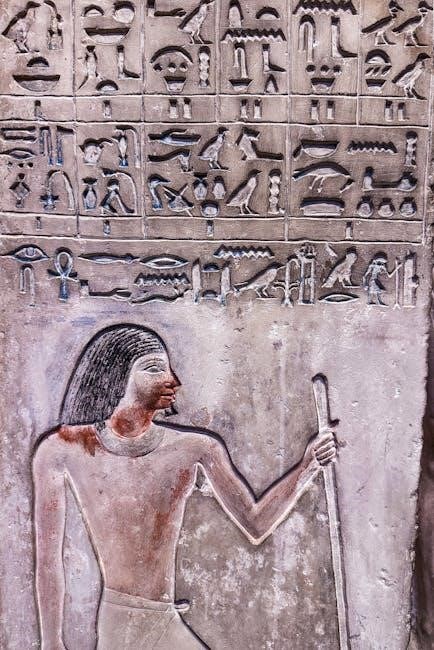
The discovery of Pyramid Texts in 1881‚ etched into pyramid walls‚ revealed early examples of this sacred writing and symbolic thought.

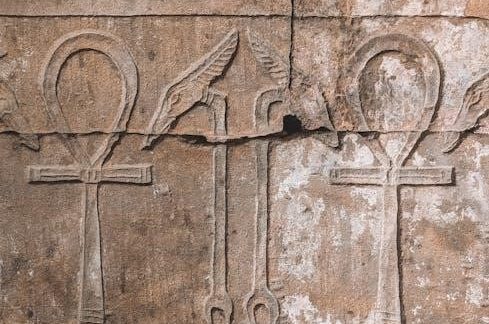
Understanding these visual languages – like the Ankh or Scarab – unlocks insights into ancient Egyptian culture‚ power‚ and the afterlife’s mysteries;

Historical Context of Egyptian Symbolism

Egyptian symbolism didn’t emerge in isolation; it evolved over millennia‚ deeply intertwined with the nation’s political and religious transformations. Its earliest manifestations predate unified Egypt‚ potentially originating in rival royal courts during the late fourth millennium BC.

The development of hieroglyphic writing around 2800 BC was pivotal‚ providing a medium to record and disseminate symbolic meanings. Initially etched onto stone within temples and tombs‚ these symbols weren’t merely decorative; they were integral to religious rituals and royal authority.

The Old Kingdom witnessed the standardization of many key symbols‚ reflecting a centralized belief system. Later periods‚ like the New Kingdom‚ saw the addition of new symbols and nuanced interpretations. The discovery of the Pyramid Texts in 1881‚ dating back approximately 4000 years‚ offered invaluable insight into the early symbolic landscape‚ revealing a complex cosmology focused on the afterlife and the pharaoh’s divine role.

Throughout Egyptian history‚ symbols adapted‚ reflecting changing theological perspectives and political power dynamics‚ yet always retaining a core connection to ancient beliefs.

The Significance of Symbols in Ancient Egyptian Life

Symbols were utterly pervasive in ancient Egyptian life‚ extending far beyond religious contexts. They weren’t simply artistic motifs but fundamental components of communication‚ belief‚ and social order. From monumental architecture like pyramids and temples to personal adornments‚ symbols conveyed meaning and reinforced cultural values.

Hieroglyphs‚ themselves symbolic representations‚ were used to record history‚ religious texts (like those found in the Pyramid Texts)‚ and everyday transactions. The symbols offered protection‚ ensured prosperity‚ and facilitated the journey to the afterlife.

The Ankh‚ representing life‚ and the Scarab Beetle‚ symbolizing rebirth‚ were common amulets worn for protection and good fortune. Even color held symbolic weight‚ influencing artistic choices and ritual practices. Understanding these symbols is crucial to interpreting Egyptian art‚ literature‚ and religious beliefs‚ offering a window into their worldview and the importance they placed on maintaining cosmic balance.
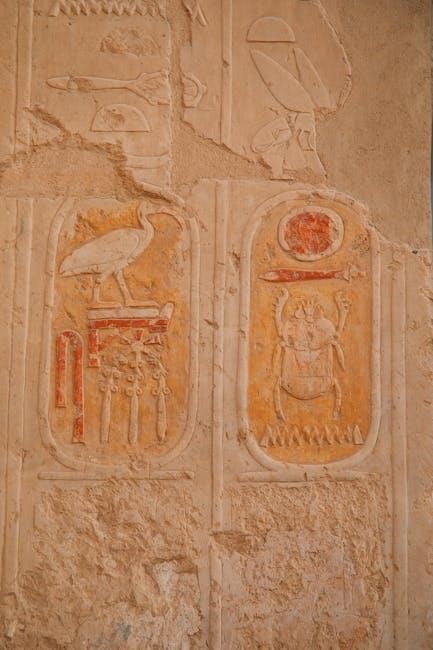
Hieroglyphs: The Sacred Writing

Hieroglyphic writing‚ appearing around 2800 BC‚ wasn’t merely a script; it was considered a sacred gift from the gods‚ embodying divine power and knowledge.

Origins and Evolution of Hieroglyphic Writing

The genesis of hieroglyphs remains somewhat enigmatic‚ with no definitive inventor identified. Archaeological evidence suggests the system likely emerged from competing royal courts during the late fourth millennium BC‚ predating a unified Egypt. Initially‚ these early forms weren’t a fully developed writing system‚ but rather a collection of pictorial representations.

Over time‚ these pictorial symbols gradually evolved into a more complex system capable of expressing abstract ideas and grammatical structures. This evolution involved incorporating both ideograms (pictures representing concepts) and phonograms (pictures representing sounds). The earliest fully formed sentences are dated to approximately 2800 BC‚ marking a significant milestone in the development of written communication.

Hieroglyphic writing was primarily used for religious and monumental purposes‚ adorning temple walls‚ tombs‚ and obelisks. Its intricate nature and association with the divine ensured its preservation as a sacred art form for over three millennia‚ undergoing subtle changes but maintaining its core principles.

Decoding Hieroglyphs: A Brief Overview

Deciphering hieroglyphs presented a formidable challenge for centuries. The key to unlocking their secrets arrived with the discovery of the Rosetta Stone in 1799‚ bearing inscriptions in hieroglyphic‚ demotic‚ and ancient Greek. This trilingual text provided a crucial comparative basis for understanding the previously enigmatic symbols.

Scholars‚ notably Jean-François Champollion‚ meticulously compared the Greek text with the hieroglyphic and demotic versions‚ recognizing that hieroglyphs functioned not only as pictograms – representing objects – but also as phonograms – representing sounds. This realization was pivotal in establishing a system for translating the ancient script.

Understanding hieroglyphs requires recognizing that they could be read in multiple directions‚ typically from right to left‚ left to right‚ or top to bottom‚ indicated by the facing direction of the animal or human figures. Modern resources‚ like Brian Pellham’s “Egyptian Hieroglyphics and Their Meanings‚” offer accessible guides for enthusiasts.
Hieroglyphs as Pictograms and Phonograms

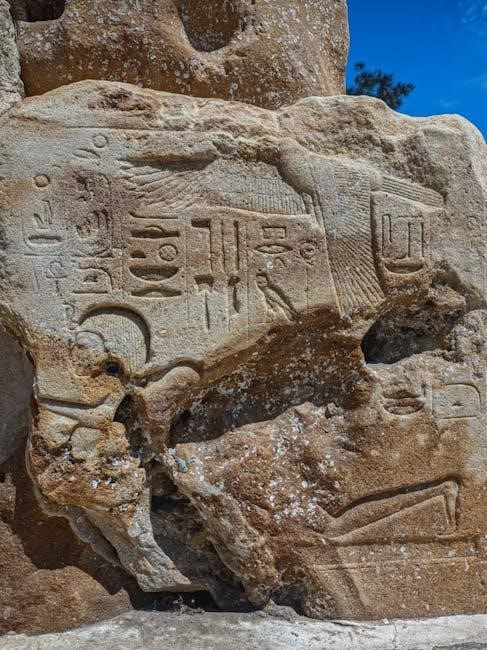
Egyptian hieroglyphs uniquely blended pictorial and phonetic elements‚ functioning as both pictograms – representing objects directly – and phonograms – representing sounds. A single glyph could embody multiple layers of meaning‚ adding complexity to the writing system.

For instance‚ a depiction of an owl could represent the bird itself (pictogram) but also the sound “m” (phonogram)‚ depending on its context within a word. This duality allowed for nuanced expression and abstract concepts to be conveyed through visual means.

The creators of these ancient symbols intentionally utilized this system‚ expressing verbs and nouns through phonetic sound values embedded within the pictorial representations. This innovative approach enabled a sophisticated level of communication‚ documented extensively on temple walls‚ tombs‚ and monuments dating back to around 2800 BC.
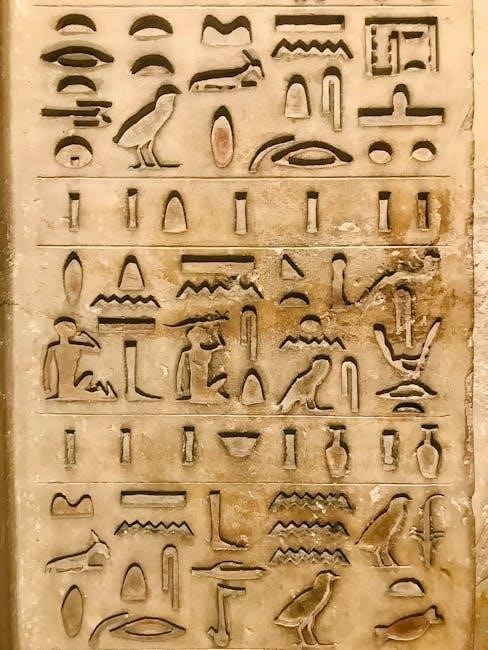
Key Egyptian Symbols and Their Meanings

Ancient Egyptians imbued objects and imagery with profound significance‚ creating a rich symbolic language reflecting their beliefs about life‚ death‚ and the cosmos.

Symbols like the Ankh‚ Scarab‚ and Eye of Horus weren’t mere decorations; they were potent representations of core religious and philosophical concepts.

The Ankh: Symbol of Life

The Ankh‚ arguably the most recognizable Egyptian symbol‚ represents “life” itself – not merely earthly existence‚ but eternal life and the breath of immortality.

Depicted as a looped cross‚ its origins remain debated‚ though it likely evolved from a hieroglyphic sign representing the sandal strap‚ subtly connecting it to the journey of life.

Frequently seen held by deities or offered to pharaohs‚ the Ankh symbolized divine power and the gift of life bestowed upon rulers‚ ensuring their continued existence in the afterlife.

Its presence in tomb decorations and funerary objects underscored the Egyptian belief in resurrection and the promise of eternal life beyond death‚ a central tenet of their faith.

The Ankh’s loop often represents the female principle‚ while the cross symbolizes the male‚ uniting to create the essence of life and continuous renewal. It embodies the cyclical nature of existence.

Beyond its religious connotations‚ the Ankh also signified well-being‚ health‚ and protection‚ making it a powerful amulet worn by both royalty and commoners alike‚ seeking blessings and longevity.

The Scarab Beetle: Symbol of Rebirth and Transformation

The Scarab beetle‚ Scarabaeus sacer‚ held profound significance for the ancient Egyptians‚ embodying themes of rebirth‚ renewal‚ and transformation. This stemmed from observing the beetle rolling dung balls across the ground.

They likened this action to the sun god Ra rolling the sun across the sky each day‚ representing the daily cycle of death and resurrection‚ and the continuous journey of creation.

The beetle was believed to spontaneously generate from the dung‚ symbolizing self-creation and the power of spontaneous generation – a concept central to their cosmology.

Scarab amulets‚ often crafted from stone or faience‚ were incredibly popular‚ worn for protection and to ensure rebirth in the afterlife. They were frequently placed over the heart during mummification.

Hieroglyphic inscriptions on the underside of scarabs often included prayers or spells intended to aid the deceased in their journey through the underworld‚ guaranteeing a successful transition.

The scarab’s association with Khepri‚ the god of the rising sun‚ further reinforced its connection to creation‚ renewal‚ and the promise of a new dawn after darkness.

The Eye of Horus: Protection‚ Health‚ and Restoration

The Eye of Horus‚ also known as the Wedjat eye‚ is one of the most recognizable symbols from ancient Egypt‚ representing protection‚ royal power‚ and good health. Its origins lie in the myth of Horus‚ the falcon-headed god.

During a battle with his uncle Seth‚ Horus lost his left eye‚ which was magically restored by Thoth‚ the god of wisdom and writing. This restoration symbolized healing and completeness.

The eye was believed to possess powerful protective qualities‚ warding off evil spirits and ensuring well-being. Amulets depicting the Eye of Horus were commonly worn by both the living and the deceased.

In funerary contexts‚ the Wedjat eye was often placed within mummy wrappings to safeguard the deceased on their journey through the afterlife‚ ensuring their resurrection.

Furthermore‚ the eye’s components were mathematically linked to fractions‚ used in measuring grain and other commodities‚ demonstrating its practical applications beyond purely religious symbolism.

The Eye of Horus embodies wholeness‚ healing‚ and the triumph of good over evil‚ remaining a potent symbol of ancient Egyptian beliefs.

The Djed Pillar: Stability and Endurance

The Djed pillar is a striking symbol in ancient Egyptian iconography‚ representing stability‚ endurance‚ and permanence. Visually‚ it resembles a column with a broad base and four parallel lines running up its length‚ often topped with a hieroglyphic symbol.

The symbol is strongly associated with the god Osiris‚ representing his spine. According to myth‚ Osiris’ spine was scattered by his brother Seth‚ and the Djed pillar symbolized its restoration‚ signifying resurrection and continued existence.
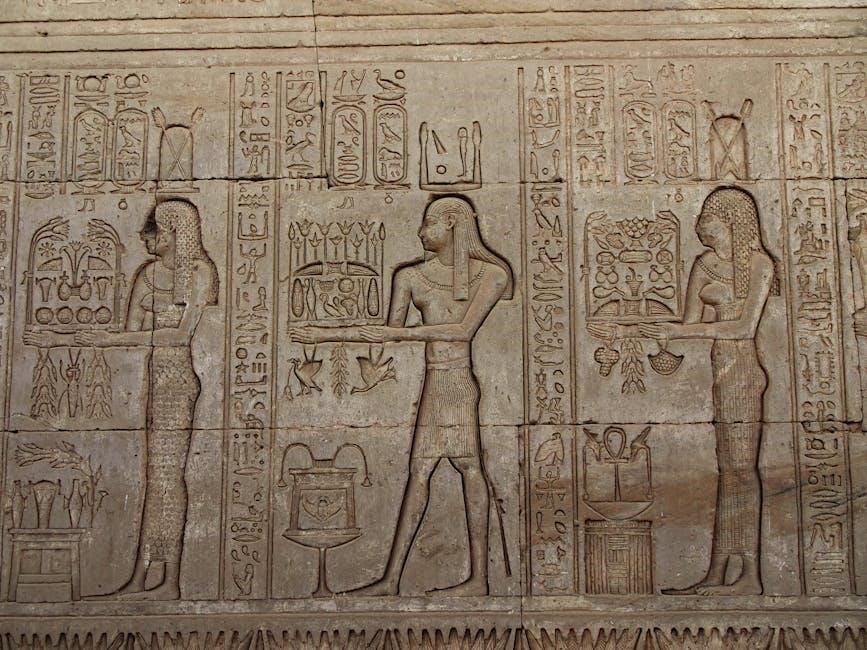
Rituals involving the “raising of the Djed” were significant ceremonies performed annually‚ particularly in connection with the agricultural cycle and the renewal of life. These ceremonies aimed to ensure the continued stability of the kingdom.

Amulets shaped like the Djed pillar were frequently worn for protection and to invoke the god Osiris’s power‚ ensuring strength and resilience in the face of adversity.

The Djed pillar’s presence in temple decoration and funerary art underscores its importance in maintaining cosmic order and guaranteeing a stable afterlife for the deceased.

Ultimately‚ the Djed pillar embodies the enduring principles of stability and the cyclical nature of life‚ death‚ and rebirth.

The Was Scepter: Power and Dominion

The Was scepter is a distinctive symbol of power‚ dominion‚ and control in ancient Egyptian art and religious belief. It’s depicted as a long staff‚ often with a slightly curved or forked end‚ frequently held by deities and pharaohs;

This scepter wasn’t merely a symbol of authority; it represented the power to maintain Ma’at – the cosmic order‚ truth‚ and justice. Gods like Set and Anubis are often shown carrying the Was scepter‚ demonstrating their control over their respective domains.

For pharaohs‚ wielding the Was scepter signified their divine right to rule and their responsibility to uphold the established order within Egypt. It was a visual declaration of their authority.

Funerary contexts frequently feature the Was scepter‚ placed in tombs to ensure the deceased’s power and status continued into the afterlife‚ allowing them to navigate the underworld successfully.

The scepter’s association with strength and control extended beyond the earthly realm‚ representing the ability to overcome chaos and ensure continued existence.

Ultimately‚ the Was scepter embodies the potent combination of divine authority and the responsibility to maintain cosmic balance.

The Crook and Flail: Kingship and Authority

The crook and flail are iconic symbols inextricably linked to ancient Egyptian kingship and the pharaoh’s authority. The crook‚ resembling a shepherd’s staff‚ represents the pharaoh’s role as the shepherd of his people‚ guiding and protecting them.

The flail‚ originally an agricultural tool for threshing grain‚ symbolizes the pharaoh’s provision and sustenance for Egypt‚ ensuring bountiful harvests and prosperity. Together‚ they embody the dual role of protector and provider.

These implements weren’t merely emblems; they signified the pharaoh’s divine connection to Osiris‚ the god of the afterlife and resurrection‚ who was also depicted with these symbols.

Visual representations consistently show pharaohs holding the crook and flail in formal portraits and during ceremonial occasions‚ reinforcing their legitimacy and power.

In funerary contexts‚ the inclusion of the crook and flail within a tomb guaranteed the deceased pharaoh’s continued authority and ability to rule in the afterlife.

The combination powerfully communicated the pharaoh’s responsibility to care for and govern Egypt‚ both in life and beyond.

Symbols in Egyptian Art and Architecture

Egyptian art and architecture extensively utilized symbolism‚ embedding profound meanings within structures like pyramids and temple decorations.

Hieroglyphic inscriptions and color choices weren’t merely aesthetic; they conveyed religious beliefs and reinforced the pharaoh’s divine authority.

Symbolism in Pyramid Construction

Pyramids‚ iconic structures of ancient Egypt‚ were far more than elaborate tombs; they were potent symbols deeply interwoven with religious beliefs about the afterlife and the pharaoh’s divine status.

The very shape of the pyramid‚ rising towards the sky‚ represented the primordial mound – Benben – from which creation arose‚ and symbolized the sun’s rays descending to Earth‚ facilitating the pharaoh’s ascent to join the gods.

Orientation played a crucial role‚ often aligning with cardinal directions or specific stars‚ reflecting astronomical knowledge and a connection to cosmic order. Internal chambers and passageways weren’t random; their layout mirrored the journey of the deceased through the underworld.

Hieroglyphic inscriptions within the pyramids‚ particularly in the Pyramid Texts discovered at Saqqara‚ detailed spells and rituals intended to aid the pharaoh’s successful transition to the afterlife‚ further emphasizing the symbolic importance of the structure itself. The pyramid’s construction‚ therefore‚ was a sacred act‚ embodying the core tenets of Egyptian cosmology and ensuring the king’s eternal existence.

Symbolic Representations in Temple Decoration

Egyptian temples weren’t simply places of worship; they were meticulously designed microcosms of the universe‚ richly adorned with symbolic representations intended to connect the earthly realm with the divine.

Walls‚ columns‚ and ceilings served as canvases for hieroglyphic narratives‚ depicting scenes of pharaohs interacting with gods‚ religious rituals‚ and mythological events. These weren’t mere illustrations‚ but powerful spells and affirmations of cosmic order.

Recurring motifs like the lotus flower (representing rebirth)‚ the scarab beetle (transformation)‚ and the djed pillar (stability) reinforced core religious beliefs. The placement of these symbols was deliberate‚ often aligning with astronomical phenomena or sacred geography.

Temple decoration also employed a sophisticated system of color symbolism‚ with each hue carrying specific meaning. The use of these visual elements transformed temples into vibrant‚ multi-layered expressions of Egyptian faith‚ designed to invoke divine presence and ensure the continuation of Ma’at – truth‚ justice‚ and cosmic balance.

The Use of Color Symbolism

Color played a crucial role in ancient Egyptian symbolism‚ extending far beyond mere aesthetics. Each hue possessed specific religious and cultural connotations‚ deeply embedded in their worldview and utilized extensively in art‚ architecture‚ and funerary practices.

Red‚ associated with the sun god Ra and the life force‚ symbolized vitality‚ victory‚ and sometimes‚ destruction. Green represented regeneration‚ fertility‚ and the lush vegetation of the Nile Valley‚ embodying new life and growth.

Blue‚ mirroring the heavens and the Nile’s life-giving waters‚ signified creation‚ rebirth‚ and protection. Yellow‚ the color of gold‚ was linked to the eternal and indestructible‚ representing the sun’s imperishable nature and divine power.

Black symbolized death and the fertile darkness of the underworld‚ while white represented purity and sacredness. These colors weren’t applied randomly; their deliberate use reinforced the symbolic meaning of images and narratives‚ creating a powerful visual language.

The Pyramid Texts and Symbolism

Discovered in 1881 at Saqqara‚ these hieroglyphic inscriptions—dating back 4000 years—represent the world’s earliest extensive religious texts.

They reveal complex symbolic themes relating to the pharaoh’s journey to the afterlife‚ utilizing potent imagery and sacred language.

The Discovery and Importance of the Pyramid Texts

The Pyramid Texts‚ a monumental find in Egyptology‚ were first discovered in 1881 by Gaston Maspero within the pyramids at Saqqara. These weren’t grand‚ visually stunning depictions like temple reliefs‚ but rather intricate hieroglyphic inscriptions carved onto the walls of the inner chambers‚ specifically within the pyramids of pharaohs and queens of the Old Kingdom.

Prior to this discovery‚ our understanding of ancient Egyptian religious beliefs surrounding death and the afterlife was largely based on later texts like the Book of the Dead. The Pyramid Texts provided an unprecedented glimpse into the earliest formalized religious concepts‚ dating back approximately 4000 years. They represent a crucial evolutionary step in Egyptian funerary literature.

Their importance lies in revealing the complex spells‚ hymns‚ and rituals intended to ensure the pharaoh’s successful transition to the afterlife and their continued power in the realm of the gods. These texts demonstrate a sophisticated theological system‚ utilizing symbolism and language to navigate the perilous journey beyond death. They are invaluable for deciphering the core beliefs that shaped ancient Egyptian civilization.

Hieroglyphic Inscriptions within the Pyramid Texts

The hieroglyphic inscriptions composing the Pyramid Texts are not merely decorative; they are meticulously crafted spells and declarations intended to aid the deceased ruler’s journey through the underworld. These inscriptions‚ etched into the stone walls of the pyramid chambers‚ utilize the full complexity of the ancient Egyptian writing system – a combination of pictograms and phonograms.

The texts aren’t presented in a linear narrative fashion‚ but rather as a collection of individual utterances‚ each serving a specific purpose. They detail the pharaoh’s ascent to the heavens‚ their identification with various deities (like Ra and Osiris)‚ and their overcoming of obstacles designed to prevent their resurrection.

Analyzing these hieroglyphs reveals a deep understanding of ancient Egyptian cosmology and religious beliefs. The phonetic sound value of each symbol was carefully considered‚ reflecting both its visual meaning and its spoken form. Deciphering these inscriptions is crucial for understanding the symbolic language and the intended magical effects of the spells contained within.

Symbolic Themes within the Pyramid Texts

Central to the Pyramid Texts are recurring symbolic themes revolving around death‚ rebirth‚ and the pharaoh’s divine status. The concept of transformation is paramount‚ mirroring the daily journey of the sun god Ra across the sky and his nightly descent into the underworld. This journey serves as a potent metaphor for the pharaoh’s own post-mortem experience.

The texts frequently employ animal symbolism‚ associating the king with powerful creatures like the bull (strength)‚ the falcon (kingship)‚ and the serpent (renewal). These associations reinforce the pharaoh’s connection to the natural world and the divine realm.

Furthermore‚ the overcoming of chaos and the establishment of order (Ma’at) are prominent motifs. The pharaoh is depicted battling forces of darkness and ultimately achieving victory‚ ensuring cosmic balance. The hieroglyphic representations themselves are imbued with symbolic meaning‚ acting as potent magical tools to facilitate this process of rebirth and ascension.

Resources for Further Study

Explore Brian Pellham’s “Egyptian Hieroglyphics and Their Meanings” for a concise reference. Online databases and academic articles offer deeper insights into symbolism.

Recommended Books on Egyptian Symbols

Delving into the world of Egyptian symbolism requires resources that bridge historical context with deciphered meanings. Brian Pellham’s “Egyptian Hieroglyphics and Their Meanings” (ISBN: 9780964967816) stands out as an accessible pocket guide‚ particularly useful for those planning visits to Egypt or museum exhibits featuring Egyptian artifacts.

While a dedicated “Egyptian Symbols and Meanings PDF” might be readily available online‚ caution is advised regarding source reliability. Scholarly books offer vetted information. Consider exploring comprehensive works on Egyptian religion and mythology‚ as symbolism is intrinsically linked to these beliefs.

Look for publications detailing hieroglyphic interpretation‚ as understanding the writing system is crucial for grasping the nuances of symbolic representation. Books focusing on Egyptian art and architecture will also illuminate how symbols were integrated into visual culture. Remember to prioritize publications from reputable academic presses and authors with established expertise in Egyptology for accurate and insightful knowledge.

Online Resources and Databases

Navigating the digital landscape for information on Egyptian symbols requires discerning evaluation. While numerous websites offer interpretations‚ verifying accuracy is paramount. Searching for an “Egyptian Symbols and Meanings PDF” yields many results‚ but prioritize resources from established institutions.

Websites affiliated with museums – such as the British Museum or the Metropolitan Museum of Art – often provide reliable overviews of key symbols and their historical context. University Egyptology departments frequently host online databases and educational materials.

Beware of sites lacking clear authorship or scholarly backing. Look for resources that cite academic research and offer detailed explanations beyond superficial definitions. Digital hieroglyphic dictionaries can aid in deciphering inscriptions‚ enhancing understanding of symbolic meaning. Remember that online resources should complement‚ not replace‚ in-depth study from reputable books and scholarly articles.


nigerian passport application form pdf

Nigerian Passport Application Form PDF: A Comprehensive Guide (Updated 03/24/2026)

Navigating the Nigerian passport application process requires understanding the online portal and form. Applicants can access the e-Passport application via the official
Nigerian Immigration Service website, starting with account creation and form completion.

Obtaining a Nigerian passport is a crucial step for citizens intending to travel internationally or establish residency abroad. The process, now largely digitized, involves navigating the
Nigerian Immigration Service (NIS) portal and completing an online application. This guide provides a comprehensive overview of the current procedures as of March 24, 2026, focusing on the e-Passport application process.

Traditionally, passport applications were paper-based, leading to delays and inefficiencies. The NIS has transitioned to an online system to streamline the process, enhance security, and improve service delivery. Applicants can now initiate their applications, upload required documents, make payments, and book appointments online. The Nigeria Consulate in Atlanta provides specific guidance for applicants applying from the USA, mirroring the core steps of the national process.

This guide will detail each stage, from initial eligibility checks and document preparation to biometric enrollment and passport collection. Understanding the requirements and procedures outlined herein will significantly contribute to a smooth and successful application experience. We will cover both fresh applications for first-time passport holders and renewal applications for those with existing passports.

Understanding the Nigerian Immigration Service Portal

The Nigerian Immigration Service (NIS) portal serves as the central hub for all passport-related applications and services. Accessing and effectively navigating this portal is fundamental to a successful application. The portal allows applicants to create accounts, initiate applications, upload supporting documents, make necessary payments, and schedule appointments for biometric data capture and submission.

Currently, the portal requires applicants to utilize existing email accounts – specifically Google or OpenID accounts – for login and application access. If an applicant doesn’t possess either, creating a new account is a prerequisite. This security measure ensures applicant identity verification throughout the process. The system guides users through each step, offering prompts and instructions.

The portal’s interface allows applicants to “Create new application” once logged in, initiating the online form. It’s crucial to carefully review all information entered before submission, as errors can cause delays. The Nigeria Consulate Atlanta directs applicants to this same portal for initiating their applications, emphasizing its central role in the process.

Accessing the Nigerian Passport Application Form PDF

While the Nigerian Immigration Service (NIS) primarily utilizes an online application system, understanding access to the application form is crucial. The process doesn’t directly involve downloading a static PDF form for completion. Instead, applicants initiate the application process through the NIS portal, where a dynamic, online form is presented.

To begin, applicants must click on “Start Application” after logging in with their Google or OpenID account. This action directs them to the interactive passport application form. The form is designed to be completed online, with sections guiding applicants through the required information.

Although a downloadable PDF isn’t the primary method, the system generates a printable version of the completed application form and a payment slip after submission. This printable output, effectively a PDF representation of the submitted data, is required for appointment booking and submission at the consulate or immigration office. The Nigeria Consulate in Atlanta confirms this step, emphasizing printing the form and slip.

Eligibility Requirements for a Nigerian Passport

Securing a Nigerian passport necessitates meeting specific eligibility criteria established by the Nigerian Immigration Service (NIS). Primarily, applicants must be Nigerian citizens by birth, descent, or naturalization. Proof of citizenship, such as a birth certificate or naturalization certificate, is fundamental to the application process.

Individuals with dual citizenship must declare this status during the application. Furthermore, applicants should possess a valid National Identification Number (NIN), as it’s a mandatory requirement for passport issuance. Those with a history of criminal convictions or pending legal proceedings may face scrutiny, and eligibility will be assessed on a case-by-case basis.

The NIS reserves the right to deny passport issuance to individuals who pose a security risk or have provided false information. Applicants applying for a passport for a minor must demonstrate parental consent and provide the necessary documentation for the child. Detailed requirements and specific document checklists are available on the NIS website and consulate websites, like the Nigeria Consulate in Atlanta.

Required Documents for a Fresh Passport Application

Applying for a new Nigerian passport demands a comprehensive set of documents to verify identity and citizenship. Essential documents include a completed online application form (printed), a recent passport-sized photograph meeting specified criteria, and proof of Nigerian citizenship – typically a birth certificate or certificate of origin.

A valid National Identification Number (NIN) is mandatory, alongside a copy of your NIN slip. Applicants must also present a letter of attestation from a recognized Nigerian citizen who can vouch for their character. For individuals born outside Nigeria, a copy of their parent’s Nigerian passport or relevant documentation is required.

Furthermore, a sworn affidavit confirming citizenship may be necessary in certain cases. The Nigeria Consulate in Atlanta provides a detailed checklist. Ensure all documents are originals or certified true copies, as stipulated by the Nigerian Immigration Service. Failure to provide complete documentation may lead to application delays or rejection.

Required Documents for Passport Renewal

Renewing a Nigerian passport is generally more streamlined than a fresh application, but still requires specific documentation. The core requirement is the completed online application form, printed and signed. Crucially, your existing Nigerian passport must be submitted with the renewal application.

A recent passport-sized photograph, adhering to the prescribed specifications, is also essential. While a birth certificate isn’t always mandatory for renewals, it may be requested in certain circumstances, particularly if there are discrepancies in existing records. Your valid National Identification Number (NIN) slip is a must-have document.

Evidence of any name change, such as a marriage certificate or official name change affidavit, must be provided. The Nigeria Consulate Atlanta outlines these requirements clearly. Referencing the Nigerian Immigration Service website ensures you have the most up-to-date list. Ensure all copies are clear and legible to avoid processing delays.

Step-by-Step Guide to Filling the Online Application Form

The Nigerian passport application process begins with a detailed online form. First, access the application portal via https://passportintl.immigration.gov.ng/. You’ll need to create an account, utilizing either a Google or OpenID account – creating a new one is necessary if you don’t have either.

Once logged in, select “Create new application.” The form is extensive, requiring personal details, travel history, and contact information. Ensure accuracy; errors can cause significant delays. Carefully review each section before proceeding. The Nigeria Consulate Atlanta provides guidance on completing the form.

After completing all sections, thoroughly review the entire application. Confirm all information is correct before submitting. The system may prompt you to correct any inconsistencies. Once satisfied, submit the form and proceed to the payment stage. Remember to print both the completed application form and the payment slip for submission at your appointment.

Creating an Account on the Immigration Portal

Initiating your Nigerian passport application requires establishing an account on the Nigeria Immigration Service (NIS) portal. Access the portal through the official link: https://passportintl.immigration.gov.ng/. The system doesn’t support direct registration with a traditional email address.

Instead, you must utilize an existing Google or OpenID account to log in. If you don’t currently possess either of these, creating a new account is a mandatory first step. This ensures secure access and streamlines the application process. The portal prioritizes security and data protection through this method.

Once you’ve successfully logged in with your chosen account, you’ll be directed to the main application dashboard. From here, you can begin the application process, create a new application, and navigate through the required steps. The Nigeria Consulate Atlanta highlights this as the initial step.

Navigating the Online Passport Application System

The Nigerian Immigration Service’s online passport application system is designed to guide applicants through a structured process. After logging in with your Google or OpenID account, locate and click the “Start Application” button. This initiates the application workflow and directs you to the passport application form.

The system interface is generally user-friendly, but requires careful attention to detail. The Nigeria Consulate Atlanta provides guidance on this process. Ensure you are using a stable internet connection throughout the application to prevent data loss or errors.

On the top right-hand corner of the page, you’ll find the option to “Create new application”. Selecting this option will present you with the comprehensive passport application form. Familiarize yourself with the different sections before beginning to ensure a smooth and efficient completion. Remember to review all entered information meticulously before submission.

Completing the Application Form Sections

The online Nigerian passport application form is divided into several sections, each requiring specific information. These sections typically cover personal details, contact information, employment history, and travel history. Accuracy is paramount; discrepancies can lead to delays or rejection of your application.

Pay close attention to mandatory fields, usually indicated by an asterisk (*). Ensure all responses are consistent with supporting documentation. The Nigeria Consulate Atlanta emphasizes the importance of correct information. Double-check names, dates of birth, and passport numbers against official records.

The system may offer drop-down menus or pre-defined options for certain fields. Select the most appropriate choice. For open-ended questions, provide concise and accurate answers. Once all sections are completed, the system will prompt you to review your application. Thoroughly examine every detail before proceeding to the payment stage.

Payment Procedures and Accepted Methods

After completing the application form, the next crucial step is payment of the prescribed fees. The Nigerian Immigration Service utilizes an online payment system integrated within the passport application portal, accessible via their official website. Currently, accepted payment methods typically include debit and credit cards (Visa, Mastercard, etc.).

The Nigeria Consulate in Atlanta specifically mentions online payment as a key step. Follow the on-screen instructions carefully during the payment process. Ensure you have a stable internet connection to avoid transaction failures. Upon successful payment, you will receive a transaction ID and a payment confirmation slip.

It is vital to print this payment slip as it serves as proof of payment and is required during your appointment for biometric enrollment and document submission. Keep a digital copy for your records as well. The system will likely not allow you to proceed without successful payment verification.

Printing the Application Form and Payment Slip

Once you’ve meticulously completed and reviewed your online passport application form, and successfully remitted the required fees, the next essential step is printing key documents. The completed application form, generated after submission, must be printed. Ensure the print quality is clear and legible, as any ambiguity could cause delays.

As highlighted by the Nigeria Consulate in Atlanta, printing the form and payment slip are critical steps in the process. Alongside the application form, you must print the official payment confirmation slip received after completing the online transaction through the Nigerian Immigration Service portal.

Both documents are mandatory for your scheduled appointment. Use a standard A4 paper size for printing. Double-check that all information on both documents matches the details entered during the online application. Bring multiple copies for added security, though typically one of each is sufficient. Failure to present these printed documents may result in the cancellation of your appointment.

Booking an Appointment for Submission

After successfully printing your completed application form and payment slip, the subsequent crucial step is securing an appointment for submission of your documents and biometric enrollment. The Nigeria Consulate in Atlanta explicitly outlines this as Step 4 in the fresh passport application process.

Appointments are typically scheduled through the official Nigerian Immigration Service portal. The availability of appointment slots can vary depending on location and demand, so it’s advisable to book well in advance. Be prepared to select a date and time that suits your availability.

During the booking process, you will likely need to provide your application ID and other relevant details. Confirm your appointment details immediately after booking and retain a copy of the confirmation for your records. Arriving without a pre-booked appointment is generally not permitted, and walk-ins are rarely accommodated. Ensure you understand the specific submission guidelines for your chosen location before your appointment date.

Biometric Enrollment Process

Biometric enrollment is a mandatory component of the Nigerian passport application process, ensuring secure identification and preventing fraud. As highlighted by the Nigeria Consulate in Atlanta, this occurs during your scheduled submission appointment (Step 5).

During biometric enrollment, your fingerprints and a digital photograph will be captured. It’s crucial to ensure your fingerprints are clean and dry for accurate scanning. The photograph will be taken at the submission center to meet specific passport photo requirements – avoid wearing glasses or head coverings unless for religious reasons.

The process is generally quick and straightforward, but cooperation with the enrollment officer is essential. Ensure the information linked to your biometrics matches the details provided on your application form. Any discrepancies could lead to delays or rejection. The captured biometric data is securely stored and linked to your passport record, enhancing the integrity of the passport system.

Consulate/Immigration Office Submission Guidelines

Submitting your application requires a pre-booked appointment and careful preparation of all necessary documents. As detailed by the Nigeria Consulate, Atlanta, Step 4 involves booking an appointment for submission and biometric enrollment.

Arrive promptly at your scheduled appointment time with the printed application form and payment slip. Bring originals and photocopies of all required documents – refer to the checklist for specifics. Ensure documents are neatly organized for efficient processing. Be prepared to answer questions regarding your application details.

At the submission center, your documents will be reviewed, and your biometric data will be captured (see Biometric Enrollment Process). Maintain a respectful and cooperative attitude with the immigration officials. Failure to present all required documents or adhere to submission guidelines may result in delays or rejection of your application. Confirm receipt of your application and obtain any tracking information provided.

Processing Time and Passport Collection

Passport processing times can vary, so patience is crucial. While the Nigerian Immigration Service doesn’t explicitly state processing times on their website as of March 24, 2026, applicants should anticipate a period of several weeks to months for completion.

Factors influencing processing time include application volume, document verification, and security checks; Regularly check the NIS portal for updates on your application status, if available. You may receive a notification via SMS or email when your passport is ready for collection.

Passport collection procedures depend on your application location. If submitted at a consulate (like the Nigeria Consulate, Atlanta), follow their specific instructions for pick-up. For applications processed domestically, you’ll likely collect your passport from the Immigration office where you submitted it. Bring valid identification and your application receipt for verification.

Troubleshooting Common Application Issues

Applicants frequently encounter issues with the online application system. A common problem is difficulty logging in, often stemming from using an unsupported email provider. The Nigeria Consulate, Atlanta advises using Google or OpenID accounts for successful login and application initiation.

Incorrectly filled forms or missing documents cause delays. Carefully review each section before submission, ensuring all information matches supporting documentation. Payment discrepancies are another frequent issue; verify your payment slip details against your application. If you encounter payment problems, contact the NIS support team.

Technical glitches on the NIS portal can occur. Try clearing your browser cache and cookies, or using a different browser. If problems persist, screenshot the error message and contact the NIS helpdesk for assistance. Keep a record of all correspondence and transaction IDs for future reference.

Important Links and Resources (NIS Website & Consulate Info)

For comprehensive information and application processing, the official Nigerian Immigration Service (NIS) website is your primary resource. Here, you’ll find updated guidelines, application forms, and payment portals. Regularly check this site for announcements and changes to procedures.

Nigerian Consulates and Embassies worldwide provide assistance to citizens abroad. The Nigeria Consulate in Atlanta offers specific guidance for applicants in their jurisdiction, including detailed steps for fresh passport applications and renewals. Their website details the required documents and appointment booking procedures.

Additional resources include the NIS helpdesk for technical support and frequently asked questions. Contact information for various consulates can be found on the Ministry of Foreign Affairs website. Remember to verify the authenticity of any third-party websites offering passport assistance, and always prioritize official sources for accurate information.

varahi kavacham telugu pdf

Varahi Kavacham: An Overview

Stotranidhi.com provides the Sri Varahi Kavacham in Telugu PDF format‚ sourced from the Sri Rudrayamala Tantra. This text offers a protective shield‚ safeguarding devotees from various adversities.

The PDF includes Telugu meanings‚ aiding comprehension of the Kavacham’s verses and enhancing devotional practice. It’s a valuable resource for those seeking Varahi Devi’s blessings.

Varahi Kavacham‚ a potent spiritual armor‚ originates from the Sri Rudrayamala Tantra and is readily accessible in a Telugu PDF format via platforms like Stotranidhi.com. This sacred text isn’t merely a collection of verses; it’s a meticulously crafted invocation designed to envelop the devotee in a protective energy field.

The Telugu PDF version is particularly beneficial‚ offering translations that unlock the Kavacham’s profound meanings for Telugu-speaking practitioners. It details a process where each body part is symbolically guarded by different energy forms of Varahi Devi. Regular recitation‚ as outlined in the PDF‚ is believed to dismantle the schemes of enemies‚ alleviate the effects of planetary afflictions‚ and secure the compassionate protection of the Divine Mother.

Essentially‚ the Kavacham functions as an invisible shield‚ offering solace and strength to those who embrace its power through dedicated practice and devotion.

The Significance of Varahi Devi

Varahi Devi‚ as revealed within the Sri Varahi Kavacham – available in Telugu PDF format on sites like Stotranidhi.com – is a fierce and compassionate manifestation of Divine Shakti. She is depicted with the face of a sow‚ symbolizing her power to unearth hidden truths and root out negativity.

The Kavacham emphasizes Varahi’s role as a protector‚ revered by deities like Brahma‚ Vishnu‚ and Shiva‚ alongside the Matrikas and Bhairavas. Her significance lies in her ability to grant liberation from obstacles and safeguard devotees from harm. The Telugu PDF highlights that consistent recitation invokes her maternal grace‚ shielding practitioners from adversity.

Varahi’s energy is considered particularly effective in neutralizing curses‚ removing obstacles‚ and ensuring victory over enemies‚ making her a powerful ally for spiritual seekers.

Origin and Scriptural Basis (Sri Rudrayamala Tantra)

The Sri Varahi Kavacham‚ readily accessible in a Telugu PDF from resources like Stotranidhi.com‚ finds its origin in the ancient Sri Rudrayamala Tantra. This tantric text is a foundational source for numerous Shakti-based practices and mantras.

The Kavacham is specifically “grahaninchabaden” – meaning derived – from the Sri Rudrayamala Tantra‚ establishing its authenticity and potency. The PDF emphasizes that this lineage connects the Kavacham to a profound spiritual tradition. It’s not merely a collection of verses‚ but a carefully constructed protective formula.

The Tantra details the precise methodology for invoking Varahi’s protective energies‚ which is reflected in the Kavacham’s structure and recitation guidelines. The Telugu version preserves this ancient wisdom.

Understanding the Kavacham

Varahi Kavacham‚ available in Telugu PDF‚ is a powerful protective formula. It utilizes specific mantras and verses to invoke the goddess’s safeguarding energies.

What is a Kavacham?

A Kavacham‚ derived from the Sanskrit word meaning “armor” or “shield‚” is a sacred text designed to offer comprehensive protection to the devotee. Within the context of the Sri Varahi Kavacham‚ specifically as found in the Telugu PDF from Stotranidhi.com‚ it’s a meticulously crafted arrangement of verses originating from the Sri Rudrayamala Tantra.

This isn’t merely a literary composition; it’s a potent spiritual instrument. The Kavacham functions as an invisible protective layer‚ enveloping the practitioner in a divine shield. Each verse‚ when recited with devotion‚ is believed to activate specific energies of Varahi Devi‚ safeguarding various aspects of the devotee’s being – physical‚ mental‚ and spiritual;

The Telugu PDF format makes this powerful practice accessible to a wider audience‚ allowing for deeper understanding through the provided translations. It’s a means of invoking Varahi’s power for overall well-being and security.

The Protective Shield Aspect

The Sri Varahi Kavacham‚ available as a Telugu PDF on Stotranidhi.com‚ embodies a powerful protective shield. Rooted in the Sri Rudrayamala Tantra‚ it’s designed to encircle the devotee with the formidable energies of Varahi Devi. This shield isn’t physical‚ but a subtle‚ energetic barrier against negativity.

The Kavacham’s verses‚ when recited‚ are believed to activate various shakti forms of the Goddess‚ safeguarding each part of the body as described within the text. This creates an “invisible protective armor‚” deflecting harmful influences and warding off obstacles.

The Telugu translation within the PDF enhances understanding‚ allowing for focused intention during recitation‚ thereby strengthening the protective effect. It’s a proactive spiritual practice for cultivating safety and well-being.

Benefits of Reciting Varahi Kavacham

Accessing the Varahi Kavacham in Telugu PDF format‚ as offered by Stotranidhi.com‚ unlocks numerous spiritual benefits. Derived from the Sri Rudrayamala Tantra‚ consistent recitation is said to dismantle the schemes of enemies and neutralize the adverse effects of planetary influences.

The Kavacham fosters a protective environment‚ shielding the devotee from misfortune and fostering a sense of security. Varahi Devi‚ known for her maternal compassion‚ is believed to safeguard those who regularly chant this powerful text.

Furthermore‚ the Telugu translation aids in deeper comprehension‚ amplifying the potency of the recitation. It’s a practice aimed at achieving both worldly success and spiritual advancement through divine grace.

Removal of Obstacles and Negative Energies

The Sri Varahi Kavacham‚ readily available in Telugu PDF format via Stotranidhi.com‚ is renowned for its ability to dismantle obstacles and dispel negative energies. Rooted in the Sri Rudrayamala Tantra‚ its verses act as a potent shield against harmful influences.

Regular recitation‚ particularly utilizing the Telugu translation for enhanced understanding‚ is believed to neutralize malicious intent and ward off envious glances. It’s a powerful tool for clearing energetic blockages that hinder progress and well-being.

The Kavacham’s protective aura safeguards the devotee‚ creating a space of peace and positivity. It’s a practice designed to overcome challenges and foster a life free from undue hardship and negativity.

Protection from Enemies and Ill Will

The Sri Varahi Kavacham‚ accessible in a Telugu PDF from sources like Stotranidhi.com‚ serves as a formidable defense against enemies and malicious intent. Derived from the Sri Rudrayamala Tantra‚ its verses create an invisible protective barrier around the devotee.

Consistent recitation‚ especially with the aid of the Telugu meaning for deeper connection‚ is believed to nullify the schemes of adversaries and deflect harmful energies directed towards you. It’s a spiritual safeguard against those who harbor ill will.

This Kavacham doesn’t promote aggression but rather establishes a powerful shield‚ ensuring peace and security amidst potential conflicts; It fosters an environment of protection and divine intervention.

The Telugu PDF and its Contents

Stotranidhi.com offers the Varahi Kavacham in Telugu PDF‚ featuring the original Sanskrit alongside Telugu translations for enhanced understanding and devotional practice.

Availability of Varahi Kavacham in Telugu PDF Format

The Sri Varahi Kavacham‚ complete with Telugu meanings‚ is readily accessible in PDF format through several online resources‚ most notably Stotranidhi.com. This digital availability ensures devotees can easily access and engage with this powerful protective hymn‚ regardless of their location or access to physical texts.

The PDF format allows for convenient downloading‚ printing‚ and reading on various devices‚ fostering a more personalized and accessible spiritual practice. Stotranidhi.com specifically highlights that this Kavacham is also included within their comprehensive “Sri Varahi Stotranidhi” parayana (recitation) book‚ available for purchase.

This widespread availability underscores the growing interest in Varahi Devi and the desire to connect with her protective energies through the recitation of this sacred Kavacham. The Telugu PDF caters specifically to the linguistic needs of Telugu-speaking devotees.

Stotranidhi.com as a Source

Stotranidhi.com stands as a prominent and reliable online source for the Sri Varahi Kavacham in Telugu PDF format. The website provides a user-friendly interface‚ allowing easy navigation to the specific stotra within their extensive collection of Sanskrit and Telugu devotional texts.

Notably‚ Stotranidhi.com indicates the Kavacham originates from the Sri Rudrayamala Tantra‚ lending scriptural authority to its practice. The site was updated on March 13‚ 2026‚ suggesting ongoing maintenance and commitment to providing current resources.

Beyond the PDF itself‚ Stotranidhi.com also offers the option to purchase the complete “Sri Varahi Stotranidhi” parayana book‚ containing this and other related stotras. This positions the website as a comprehensive hub for devotees seeking to deepen their connection with Varahi Devi.

Content Breakdown: Sections within the PDF

The Sri Varahi Kavacham Telugu PDF‚ available via Stotranidhi.com‚ is structured around key elements essential for proper recitation and understanding. It begins with the Asya Sri Varahikavachasya – the introductory verse establishing the Rishi‚ Chandas‚ and Devata.

Following this is the Dhyana Shloka‚ a meditative verse vividly describing Varahi Devi’s appearance and divine attributes. The core of the PDF comprises the individual Shlokas (verses) of the Kavacham‚ each accompanied by Telugu translations to facilitate comprehension.

Crucially‚ the PDF includes the Beeja‚ Shakti‚ and Keelakam‚ vital components for invoking the Kavacham’s protective energies. The inclusion of the Nyasa further guides the devotee in proper invocation practices‚ ensuring a potent and effective recitation.

The Importance of Telugu Meaning

The availability of the Sri Varahi Kavacham with Telugu meaning‚ as offered by Stotranidhi.com‚ is profoundly significant for devotees who are native Telugu speakers or wish to deepen their understanding. Simply reciting the Sanskrit verses can be beneficial‚ but grasping the nuances within the Telugu translation unlocks a richer‚ more profound connection.

The Telugu meaning clarifies the symbolism‚ the descriptions of Varahi Devi‚ and the intent behind each shloka. This enhanced comprehension fosters greater bhava (devotional emotion) and allows for a more focused and effective meditative practice.

It bridges a linguistic gap‚ making the Kavacham accessible and empowering a wider audience to experience its protective benefits and divine grace.

Decoding the Kavacham – Key Elements

The Sri Varahi Kavacham‚ from the Sri Rudrayamala Tantra‚ identifies Trilochana as the Rishi‚ Anushtup as the Chandas‚ and Sri Varahi as the Devata.

The Rishi‚ Chandas‚ and Devata

Understanding the foundational elements of the Varahi Kavacham is crucial for proper recitation and realizing its full benefits. According to the text available in the Telugu PDF from Stotranidhi.com‚ sourced from the Sri Rudrayamala Tantra‚ the Rishi – the seer of this Kavacham – is Trilochana.

The Chandas‚ or meter‚ is identified as Anushtup‚ a commonly used meter in Vedic literature‚ lending a specific rhythm and flow to the verses. Most importantly‚ the Devata – the presiding deity – is Sri Varahi Devi herself. These three elements – Rishi‚ Chandas‚ and Devata – form the core of the Kavacham’s energetic structure‚ establishing a connection between the devotee‚ the verse’s form‚ and the divine power invoked.

Recognizing these components enhances the depth of the recitation and fosters a stronger spiritual connection with Varahi Devi.

Meaning of the Beeja‚ Shakti‚ and Keelakam

Delving deeper into the Varahi Kavacham’s energetic structure‚ as detailed in the Telugu PDF from Stotranidhi.com‚ reveals the significance of the Beeja‚ Shakti‚ and Keelakam. The Beeja‚ or seed syllable‚ is Om‚ representing the primordial sound and the source of creation. The Shakti‚ or power‚ is Glaum‚ embodying Varahi Devi’s dynamic energy and fierce protective force.

Finally‚ the Keelakam‚ or locking mechanism‚ is Swaha‚ signifying completion and the sealing of the Kavacham’s protective influence. These three elements work synergistically to activate the Kavacham’s power‚ channeling Varahi Devi’s energy for the devotee’s benefit.

Understanding their meanings enhances the efficacy of the recitation and deepens one’s connection to the divine.

The Nyasa (Invocation)

The Nyasa‚ a crucial component of the Varahi Kavacham‚ as presented in the Telugu PDF from Stotranidhi.com‚ is a ritualistic invocation that establishes a connection between the devotee and the deity. The specific Nyasa formula – “Mama Sarva Shatrunashanarthe Jape Viniyogah” – declares the purpose of recitation: for the destruction of all enemies.

This isn’t merely a physical threat‚ but also internal obstacles and negative energies. Through Nyasa‚ the devotee mentally assigns the Kavacham’s power to different parts of the body‚ creating an energetic shield.

This process prepares the practitioner for effective recitation and maximizes the Kavacham’s protective benefits‚ aligning them with Varahi Devi’s potent energy.

The Dhyana Shloka (Meditation Verse)

The Dhyana Shloka‚ found within the Varahi Kavacham Telugu PDF‚ vividly describes Varahi Devi’s appearance – dark-complexioned‚ with three eyes‚ and adorned with jewels.

Description of Varahi Devi’s Appearance

The Varahi Kavacham’s Dhyana Shloka‚ accessible in the Telugu PDF from Stotranidhi.com‚ paints a striking portrait of the Goddess. She is envisioned with a complexion like a dark-blue jewel – Indraneela Varnabham – radiating a powerful‚ captivating energy. Her three eyes‚ likened to the sun‚ moon‚ and fire – Chandra Surya Agnilochanaam – symbolize her dominion over the three worlds and her ability to perceive all of existence.

Varahi Devi is depicted wearing a crown crafted from blazing jewels – Jvalanmaniganaprokthamakutambaavilambitam – signifying her royal status and divine authority. She is also described as adorned with ornaments that cascade down to her shoulders‚ enhancing her majestic presence. This detailed imagery‚ presented in the Telugu PDF‚ aids devotees in focused meditation and visualization during Kavacham recitation.

Symbolism within the Dhyana Shloka

The Dhyana Shloka‚ found within the Sri Varahi Kavacham Telugu PDF from Stotranidhi.com‚ is rich with symbolic meaning. The Goddess’s three eyes represent her perception of past‚ present‚ and future‚ and her control over time itself. Her dark-blue complexion signifies immense power and depth‚ akin to the vastness of the ocean.

Being served by deities like Brahma‚ Vishnu‚ and Shiva – Vidhi Vishnu Harendraadi – highlights Varahi’s supreme status. The mention of Matrukagana and Bhairavas emphasizes her connection to potent energies. The jewel-studded crown symbolizes her sovereignty‚ while the overall description evokes a fierce yet benevolent protector‚ readily accessible through dedicated recitation of the Kavacham.

The Divine Attributes Highlighted

The Sri Varahi Kavacham‚ available in Telugu PDF format via Stotranidhi.com‚ powerfully highlights Varahi Devi’s divine attributes. She is depicted as a radiant being‚ adorned with a crown of blazing jewels – Jvalanmaniganaprokta – signifying her brilliance and authority. The Kavacham emphasizes her possession of all necessary weapons‚ perfectly suited for any task – Astra shastrani sarvani – demonstrating her capability to overcome all obstacles.

Furthermore‚ the text underscores her accessibility to devotees‚ served by major deities and powerful energies. This emphasizes her compassionate nature and willingness to protect those who seek her grace. The Dhyana Shloka vividly portrays a goddess embodying strength‚ wisdom‚ and protective power.

Exploring the Verses (Shlokas)

Shloka 1 initiates the Kavacham with an invocation and describes Varahi Devi‚ while Shloka 2 details her adornments and weaponry‚ as found in the Telugu PDF.

Shloka 1: Initial Invocation and Description

Shloka 1‚ as presented in the Telugu PDF from Stotranidhi.com‚ serves as the foundational invocation of the Sri Varahi Kavacham. It begins with a profound dhyana‚ a meditative verse calling upon the divine presence of Varahi Devi. The verse describes her radiant form‚ possessing a complexion like polished indigo and adorned with three eyes representing the sun‚ moon‚ and fire – symbols of cosmic energy.

This initial shloka establishes Varahi Devi as a powerful deity revered by Brahma‚ Vishnu‚ Maheshwara‚ Indra‚ and the Matrika ganas‚ along with Bhairavas. It sets the stage for the Kavacham’s protective verses‚ highlighting her divine authority and the blessings she bestows upon her devotees. The Telugu translation within the PDF clarifies these attributes‚ deepening understanding and facilitating focused meditation.


Shloka 2: Adornments and Weapons

Shloka 2‚ detailed within the Telugu PDF sourced from Stotranidhi.com‚ elaborates on Varahi Devi’s majestic adornments and formidable weaponry. The verse depicts her crowned with a radiant diadem crafted from blazing jewels‚ signifying her power and sovereignty. She is described as wearing ornaments that cascade down to her shoulders‚ enhancing her divine beauty.

Crucially‚ this shloka emphasizes Varahi Devi’s preparedness for battle‚ detailing her possession of a complete arsenal of weapons – astra and shastra – each perfectly suited for its intended purpose. This signifies her ability to vanquish enemies and protect her devotees. The Telugu translation clarifies the specific types of weaponry‚ providing a richer understanding of her protective capabilities as outlined in the Sri Rudrayamala Tantra.

Further Shlokas and their Meanings (Overview)

The Sri Varahi Kavacham‚ available in Telugu PDF format on Stotranidhi.com‚ extends beyond the initial two shlokas‚ detailing further aspects of the Devi’s power and protective aura. Subsequent verses‚ rooted in the Sri Rudrayamala Tantra‚ continue to invoke various forms and energies of Varahi‚ assigning them to different body parts for comprehensive safeguarding.

The Telugu translations within the PDF illuminate the nuanced meanings of each shloka‚ revealing how Varahi Devi’s divine attributes counteract negative influences and obstacles. These verses collectively establish an invisible shield around the devotee‚ neutralizing harmful energies and ensuring well-being. The Kavacham’s continued recitation‚ guided by the Telugu interpretations‚ fosters a deeper connection with the Devi’s protective grace.

Practical Application and Recitation

Varahi Kavacham recitation‚ found in the Telugu PDF‚ benefits from proper technique and devotion. Consistent practice‚ ideally daily‚ amplifies its protective effects.

Proper Recitation Techniques

To effectively utilize the Varahi Kavacham from the Telugu PDF‚ mindful recitation is crucial. Begin by finding a quiet and clean space‚ free from distractions. Ideally‚ face East or North while reciting. Prior to commencing‚ a brief purification ritual – achamana – is recommended.

Pronunciation of the Sanskrit verses‚ even when using the Telugu transliteration‚ should be as accurate as possible. Focus on the Beeja‚ Shakti‚ and Keelakam mantras‚ understanding their significance. Maintain a steady rhythm and clear enunciation. Visualize Varahi Devi as described in the Dhyana Shloka during the recitation.

The Kavacham isn’t merely a vocal exercise; it’s a meditative practice. Recite with sincere devotion and a clear intention – whether for protection‚ obstacle removal‚ or spiritual growth.

Recommended Time for Recitation

While the Varahi Kavacham‚ accessible via the Telugu PDF‚ can be recited at any time‚ certain periods are considered particularly auspicious. Dawn (Brahma Muhurta)‚ typically between 4:00 AM and 6:00 AM‚ is highly favored for its serene energy. Evening‚ specifically during twilight (Sandhyakalam)‚ is also beneficial.

Many practitioners prefer reciting during Ashtami or Navami tithis (lunar days) dedicated to the Divine Mother. Specific days aligned with Varahi Devi’s energies‚ as determined by a Telugu Pandit‚ are ideal. Avoid reciting during inauspicious times or when feeling physically or mentally unwell.

Consistency is key; daily recitation‚ even a few verses‚ yields greater benefits than sporadic‚ lengthy sessions. The Telugu PDF facilitates regular practice.

The Role of Faith and Devotion

Reciting the Varahi Kavacham‚ readily available in Telugu PDF format‚ transcends mere word repetition. Genuine faith (Shraddha) and heartfelt devotion (Bhakti) are paramount. Approaching the Kavacham with reverence amplifies its protective and transformative power.

Understanding the Telugu meanings‚ as provided in the PDF‚ fosters deeper connection and devotion. Visualize Varahi Devi during recitation‚ immersing yourself in her divine energy. A sincere intention – seeking protection‚ removing obstacles‚ or attaining spiritual growth – strengthens the practice.

Devotion isn’t about perfection; it’s about offering your sincere effort. Consistent‚ loving recitation‚ guided by the Telugu PDF‚ unlocks the Kavacham’s full potential.

Additional Resources

Stotranidhi.com offers the Varahi Kavacham in Telugu PDF. Explore related stotras and mantras online‚ or consult a Telugu Pandit for guidance.

Other Websites Offering Varahi Kavacham

While Stotranidhi.com is a primary source for the Sri Varahi Kavacham with Telugu meanings‚ several other online platforms also host this powerful text. Searching for “Sri Varahi Kavacham Telugu PDF” will reveal various websites offering downloadable versions‚ though verifying the accuracy of translations is crucial.

Some websites may provide transliterated versions alongside the Telugu script‚ aiding those unfamiliar with the script. Others might offer audio recitations to assist with proper pronunciation. It’s beneficial to compare multiple sources to gain a comprehensive understanding of the Kavacham’s verses and their interpretations.

Remember to prioritize websites with a reputation for authentic Vedic content and reliable translations. Always exercise caution when downloading files from unfamiliar sources to protect your device from potential security risks.

Related Stotras and Mantras

For devotees exploring the realm of Varahi Devi’s worship‚ several related stotras and mantras complement the Sri Varahi Kavacham. The Sri Varahi Stotranidhi‚ mentioned on Stotranidhi.com‚ contains a collection of hymns dedicated to the Goddess‚ deepening one’s connection.

Other relevant texts include the Varahi Ashtakam and various Varahi mantras focused on specific blessings like protection‚ victory‚ and removal of obstacles. These mantras‚ often found alongside the Kavacham‚ enhance the overall spiritual practice. Exploring these resources provides a holistic approach to Varahi Devi’s adoration.

Consistent recitation of these stotras and mantras‚ alongside the Kavacham‚ is believed to amplify their combined benefits‚ fostering a stronger spiritual shield and divine grace.

Finding a Telugu Pandit for Guidance

For those seeking a deeper understanding of the Sri Varahi Kavacham in Telugu‚ consulting a knowledgeable Telugu Pandit is highly recommended. A Pandit can provide accurate pronunciations‚ clarify complex verses‚ and explain the nuances of the Sri Rudrayamala Tantra origins.

They can also offer personalized guidance on proper recitation techniques and the significance of the nyasa (invocation). Finding a Pandit familiar with Stotranidhi.com’s resources ensures access to authentic interpretations of the Telugu text.

Local temples or online platforms specializing in Vedic studies are excellent starting points for locating a qualified Pandit. Their expertise will enrich your devotional practice and unlock the Kavacham’s full potential.

arguments and arguing 4th edition pdf free

Arguments and Arguing 4th Edition: A Comprehensive Overview

Discover the latest edition‚ released May 6th‚ 2022‚ offering a definitive guide to persuasive communication‚
with resources available for download and instructor access․

This fourth edition of “Arguments and Arguing” builds upon its established reputation as a cornerstone text for understanding the intricacies of human decision-making and persuasive communication․ Released on May 6th‚ 2022‚ this iteration provides a thoroughly revised and updated exploration of argumentation theory and practice․

The book delves into the processes of crafting compelling arguments‚ encompassing writing‚ public speaking‚ and strategic framing techniques․ Students and practitioners alike will benefit from its comprehensive coverage‚ while seeking accessible resources‚ including potential PDF versions‚ to enhance their learning experience․ It’s a vital resource for navigating modern discourse․

Key Authors: Hollihan and Baaske

Thomas A․ Hollihan and Kevin T․ Baaske are the esteemed authors behind “Arguments and Arguing‚” bringing decades of combined expertise to the field of argumentation studies․ Their collaborative work provides a robust framework for analyzing and constructing effective arguments․

Hollihan and Baaske’s approach emphasizes the practical application of argumentation principles‚ making the text invaluable for students preparing for academic‚ professional‚ and civic engagement․ Their commitment to clarity and accessibility ensures that complex concepts are readily understandable‚ even when exploring resources like a potential downloadable PDF edition․

Publication Details and ISBNs

“Arguments and Arguing‚ 4th Edition” was officially released on May 6th‚ 2022‚ and is available in paperback format‚ spanning 371 pages․ Key ISBNs include 9780190924232‚ 9781478649106‚ 9781478647690‚ and 1478647698․

The book’s file size is approximately 51․6 MB‚ potentially impacting download times․ Resources for instructors are accessible through compswaveland․com‚ requiring a username and password․ While seeking a free PDF version‚ remember to respect copyright and consider legitimate purchasing options to support the authors and publisher․

Core Concepts of Argumentation

Explore argumentation as a fundamental human process‚ vital for decision-making and negotiating understanding‚ as detailed within this comprehensive guide to effective reasoning․

Defining Argumentation: Process and Product

Argumentation‚ as explored in this edition‚ isn’t merely a dispute but a deliberate process of making sense of the world․ It’s about constructing and communicating reasoned perspectives to influence beliefs or actions․ This involves both a process – the act of arguing – and a product – the argument itself‚ a structured set of claims and evidence․

The book emphasizes argumentation’s link to human decision-making‚ highlighting how we constantly evaluate information and negotiate understandings․ Understanding this duality – process and product – is crucial for both crafting compelling arguments and critically analyzing those presented by others․ It’s a fundamental activity for navigating complex issues․

The Role of Decision-Making

Central to the study of argumentation is its inherent connection to human decision-making․ The 4th edition underscores that arguing isn’t simply about ‘winning’ but about influencing choices․ Every argument aims to shift someone’s perspective‚ ultimately impacting a decision․ This edition explores how individuals assess information‚ weigh evidence‚ and navigate conflicting viewpoints․

Effective argumentation‚ therefore‚ requires understanding the cognitive processes involved in decision-making․ Recognizing biases‚ anticipating counterarguments‚ and tailoring appeals to specific audiences are all vital skills․ It’s about presenting a compelling case that resonates with the decision-maker’s values and reasoning․

Understanding Human Negotiation

Arguments frequently unfold within the context of negotiation – a process of mutual adjustment aiming for a beneficial outcome․ The 4th edition highlights that negotiation isn’t solely about compromise; it’s a dynamic interplay of persuasion and reasoning․ Successful negotiators understand the other party’s needs‚ values‚ and potential constraints․

This edition delves into strategies for effective negotiation‚ including active listening‚ framing proposals‚ and identifying common ground․ Recognizing that arguing is a fundamental human activity‚ it emphasizes building rapport and fostering collaborative problem-solving‚ ultimately leading to mutually acceptable resolutions․

Essential Tools for Effective Arguing

Master key skills: writing‚ public speaking‚ and strategic framing‚ all powerfully updated in this edition to enhance your argumentative capabilities․

Writing for Argumentation

Developing strong written arguments is central to effective persuasion‚ as highlighted in the 4th edition․ This involves clearly defining your position and supporting it with robust evidence․ The text emphasizes crafting compelling narratives and structuring arguments logically for maximum impact․

Furthermore‚ the guide provides insights into tailoring your writing style to different audiences and contexts; Mastering these techniques‚ alongside understanding the argumentative process‚ empowers you to articulate your ideas persuasively․ Accessing resources‚ potentially through downloadable PDF formats‚ can further refine these skills․

Public Speaking and Argument Delivery

The 4th edition underscores the importance of effective delivery in public speaking‚ complementing strong argumentation․ Mastering vocal projection‚ body language‚ and engaging presentation styles are crucial for persuading audiences․

It details how to adapt your delivery to various settings and audience demographics‚ maximizing your impact․ Resources‚ potentially available as a downloadable PDF‚ can offer practical exercises and examples․ This edition emphasizes framing arguments powerfully‚ ensuring clarity and resonance with listeners‚ ultimately enhancing persuasive communication skills․

Framing Arguments for Maximum Impact

This edition highlights the critical role of framing in shaping audience perception․ Effective framing involves strategically presenting arguments to emphasize specific aspects and resonate with values․

Understanding how to tailor your message—potentially explored within a downloadable PDF resource—is key to persuasive success․ The book details techniques for constructing narratives and utilizing rhetorical devices to maximize impact․ Mastering framing‚ alongside strong delivery‚ ensures arguments are not only logically sound but also emotionally compelling‚ increasing the likelihood of acceptance․

Argumentative Structures and Techniques

Explore classical‚ Rogerian‚ and Toulmin models‚ essential for building robust arguments․ Accessing the 4th edition’s insights—perhaps via a PDF—enhances understanding․

Classical Argumentation Model

Delve into the time-honored classical model‚ a foundational structure for effective argumentation․ This approach‚ detailed within “Arguments and Arguing‚” typically begins with an exordium (introduction) to capture audience attention․ Following this is the narratio‚ presenting the facts of the case‚ and the partitio‚ outlining the key issues․

The confirmatio then presents the arguments supporting your claim‚ bolstered by evidence․ Crucially‚ the refutatio addresses and dismantles opposing viewpoints․ Finally‚ the peroratio concludes with a compelling summary and call to action․ Finding a downloadable PDF of the 4th edition can greatly aid in mastering this technique․

Rogerian Argumentation Approach

Explore the Rogerian method‚ a uniquely empathetic approach to persuasion‚ thoroughly examined in “Arguments and Arguing․” Unlike confrontational styles‚ it prioritizes establishing common ground with the opposition․ This begins with accurately summarizing the opposing viewpoint‚ demonstrating understanding․

Next‚ acknowledge the validity of those points before gently introducing your own perspective․ Crucially‚ highlight areas of agreement and minimize conflict․ The goal isn’t to “win‚” but to foster mutual comprehension․ Accessing a PDF copy of the 4th edition will illuminate this nuanced technique for effective communication․

Toulmin Model of Argumentation

Delve into the Toulmin Model‚ a powerful analytical tool detailed within “Arguments and Arguing․” This framework breaks down arguments into six key components: claim‚ data‚ warrant‚ backing‚ qualifier‚ and rebuttal․ Understanding these elements allows for a systematic evaluation of any argument’s strength and weaknesses․

The model emphasizes the importance of warrants – the often-unspoken assumptions connecting data to the claim․ A PDF version of the 4th edition provides practical examples and exercises to master this approach‚ enhancing your ability to construct and critique persuasive reasoning effectively․

Analyzing Arguments

Learn to dissect arguments by identifying premises‚ conclusions‚ and potential fallacies‚ skills honed through the 4th edition’s detailed guidance and downloadable PDF resources․

Identifying Premises and Conclusions

Mastering argument analysis begins with pinpointing the core components: premises and conclusions․ The 4th edition of Arguments and Arguing provides robust tools for this crucial skill․ Premises are the statements offered as reasons‚ while the conclusion is the claim being supported․

Successfully discerning these elements allows for critical evaluation․ The text‚ accessible via PDF download‚ emphasizes systematic deconstruction of arguments․ Understanding this foundational step is vital for recognizing logical structures and potential weaknesses within persuasive communication‚ ultimately enhancing your own argumentative abilities․

Recognizing Logical Fallacies

A cornerstone of critical thinking‚ identifying logical fallacies is thoroughly covered in the 4th edition of Arguments and Arguing․ These flawed reasoning patterns undermine the validity of an argument‚ often appearing deceptively persuasive․

The text‚ available as a downloadable PDF‚ details common fallacies – from ad hominem attacks to straw man arguments – equipping readers to dissect and refute weak reasoning․ Recognizing these errors is essential not only for evaluating others’ claims but also for ensuring the soundness of your own arguments‚ bolstering persuasive power․

Evaluating Evidence and Support

The 4th edition of Arguments and Arguing emphasizes rigorous evidence evaluation‚ crucial for constructing and assessing compelling arguments․ Accessing the PDF version provides detailed guidance on discerning credible sources from unreliable ones․

Students learn to analyze the quality‚ relevance‚ and sufficiency of supporting data․ This includes examining statistical evidence‚ expert testimony‚ and anecdotal evidence‚ understanding potential biases‚ and recognizing manipulative tactics․ Mastering these skills‚ detailed within the 371-page text‚ empowers effective decision-making and persuasive communication․

Types of Arguments

Explore arguments of fact‚ value‚ and policy‚ detailed in the 2022 edition‚ enhancing your understanding of persuasive strategies and critical thinking skills․

Arguments of Fact

Delve into arguments centered on establishing the truth or falsity of a claim․ These arguments rely heavily on evidence‚ research‚ and verifiable data‚ as explored within the 2022 edition of Arguments and Arguing․

Effectively constructing such arguments requires careful consideration of sources and a robust understanding of logical reasoning․ The text emphasizes the importance of accurate information and avoiding misinformation‚ particularly relevant in today’s digital age․

Mastering this type of argumentation is crucial for informed decision-making and navigating complex issues‚ with the book providing tools for analysis and evaluation․

Arguments of Value

Explore arguments that debate the worth‚ merit‚ or morality of an idea‚ object‚ or action․ Arguments and Arguing‚ updated in 2022‚ details how these arguments often involve subjective judgments and ethical considerations․

Successfully presenting a value argument necessitates establishing clear criteria for evaluation and demonstrating how the subject meets those standards․ The book highlights the importance of framing arguments persuasively and appealing to shared values․

Understanding these arguments is vital for engaging in meaningful discussions about complex ethical dilemmas and shaping public opinion‚ offering a comprehensive guide to effective persuasion․

Arguments of Policy

Delve into arguments focused on courses of action‚ advocating for specific policies or changes․ The 4th edition of Arguments and Arguing‚ released in 2022‚ emphasizes the practical application of argumentation in real-world decision-making․

Constructing a policy argument requires demonstrating a problem exists‚ proposing a solution‚ and proving the solution is feasible and beneficial․ The text stresses the importance of anticipating counterarguments and offering robust rebuttals․

Mastering these skills is crucial for influencing public discourse‚ advocating for social change‚ and participating effectively in democratic processes‚ offering a guide to powerful persuasion․

The Argumentative Process

Effectively build arguments through research‚ careful planning‚ and outlining‚ followed by skillful refutation and rebuttal – key elements detailed in the 2022 edition․

Research and Evidence Gathering

Robust argumentation hinges on thorough research and compelling evidence․ The 4th edition emphasizes diligent information gathering to support claims effectively․ Accessing resources‚ including potentially downloadable PDF versions‚ is a crucial first step․ Students should explore diverse sources‚ critically evaluating their credibility and relevance to the argument at hand․

Furthermore‚ the text highlights the importance of understanding how evidence contributes to the decision-making process․ Strong evidence strengthens persuasive power‚ enabling a more convincing and impactful presentation of ideas․ Utilizing available resources‚ like those found online‚ can significantly enhance this process․

Planning and Outlining

Effective argumentation demands meticulous planning and a well-structured outline․ The 4th edition underscores the necessity of organizing thoughts logically before constructing an argument․ Whether utilizing a classical‚ Rogerian‚ or Toulmin model‚ a clear framework is paramount․

Consider the target audience and the desired outcome when formulating your plan․ A strong outline ensures coherence and facilitates a persuasive flow of ideas․ Resources‚ including potentially accessible PDF versions of the text‚ can offer valuable examples and guidance for structuring arguments effectively‚ maximizing impact and clarity․

Refutation and Rebuttal

Mastering refutation and rebuttal is crucial for robust argumentation‚ as highlighted in the 4th edition․ Anticipate counterarguments and prepare well-reasoned responses․ Acknowledging opposing viewpoints demonstrates fairness and strengthens your credibility․

Effectively dismantling opposing claims requires identifying weaknesses in their premises or evidence․ Resources‚ potentially found in downloadable PDF formats of the textbook‚ offer strategies for constructing compelling rebuttals․ Successfully addressing counterarguments solidifies your position and enhances the persuasiveness of your overall argument‚ leading to more effective decision-making․

Digital Age Argumentation

Explore how argumentation evolves online‚ navigating misinformation and digital rhetoric‚ crucial skills covered in the 4th edition‚ accessible via PDF and eBook formats․

Arguing Online and in Social Media

Navigating the complexities of digital discourse requires a nuanced understanding of argumentative strategies․ The 4th edition delves into the unique challenges presented by online platforms and social media environments․
It addresses the rapid spread of misinformation and the importance of critical evaluation of sources․

Furthermore‚ it examines how rhetorical techniques adapt to digital formats‚ influencing persuasion and engagement․ Understanding these dynamics is vital for effective communication and responsible participation in online debates․ Accessing resources‚ potentially in PDF format‚ enhances comprehension of these evolving landscapes․

The Impact of Misinformation

A critical focus of the 4th edition is the pervasive influence of misinformation in contemporary society․ The text explores how false or misleading information undermines reasoned argumentation and informed decision-making․ It equips readers with tools to identify and deconstruct deceptive tactics commonly employed online․

Understanding the psychological factors that contribute to the acceptance of misinformation is also key․ Resources‚ including potential PDF downloads‚ offer strategies for combating its spread and promoting media literacy․ This section emphasizes ethical considerations in a digital age saturated with unverified claims․

Digital Rhetoric and Persuasion

This section delves into the unique characteristics of persuasive communication within digital environments․ It examines how traditional rhetorical principles adapt – and are challenged – by platforms like social media․ The 4th edition analyzes the impact of algorithms‚ visual rhetoric‚ and online communities on argumentative strategies․

Readers will explore techniques for crafting effective arguments tailored to specific digital contexts․ Accessing resources‚ potentially through a PDF version of the text‚ provides insights into digital persuasion and the ethical implications of online rhetoric․ Mastering these skills is crucial for navigating today’s communication landscape․

Resources and Support Materials

Instructors can access supplementary materials via compswaveland․com‚ requiring a username and password․ The book’s 51․6 MB file size may impact download times․

Instructor Resources and Access

Dedicated instructor resources are readily available to support teaching with “Arguments and Arguing‚ 4th Edition․” To gain access to these valuable materials‚ instructors should visit compswaveland․com․ A username and password are required for secure access to the comprehensive suite of teaching tools․

These resources are designed to enhance course preparation and delivery‚ offering supplementary materials to complement the textbook’s content․ While a free PDF version is sought by some‚ official instructor access provides curated and authorized support for educators utilizing this edition․

Availability of PDF and eBook Formats

While a desire for a freely available PDF of “Arguments and Arguing‚ 4th Edition” is common among students‚ official access typically requires purchase or library borrowing․ The book is available in paperback format (371 pages) and boasts a file size of 51․6 MB‚ potentially leading to longer download times․

eBook formats‚ including ePub‚ may be accessible through various online platforms and textbook repositories․ However‚ verifying the legality and source of such downloads is crucial․ Authorized eBook access often requires a purchase or subscription․

File Size and Download Considerations

The “Arguments and Arguing‚ 4th Edition” PDF file size is reported as 51․6 MB․ This substantial size suggests that downloading may take a considerable amount of time‚ dependent on your internet connection speed․ Users should ensure a stable connection to avoid interruptions during the download process․

Furthermore‚ be cautious when sourcing the PDF online‚ as larger files are often targets for malware․ Always scan downloaded files with reputable antivirus software before opening them․ Consider eBook formats as alternatives‚ potentially offering smaller file sizes․

Related Works and Influences

“Thank You for Arguing” explores the art of persuasion‚ complementing “Arguments and Arguing” with insights into rhetorical strategies and effective communication techniques․

“Thank You for Arguing” and Persuasion

Jay Heinrichs’ “Thank You for Arguing” provides a practical guide to classical rhetoric‚ mirroring the core principles explored within “Arguments and Arguing․” Both texts emphasize the power of persuasive techniques‚ though Heinrichs focuses on applying these strategies in everyday life․

Heinrichs’ work delves into Aristotle’s rhetorical appeals – ethos‚ pathos‚ and logos – offering accessible explanations and examples․ This complements the fourth edition’s exploration of argumentative structures and techniques‚ enhancing understanding of how to frame arguments effectively․

Ultimately‚ both resources aim to empower individuals with the skills to analyze‚ construct‚ and deliver compelling arguments‚ fostering critical thinking and effective communication․

Animal Behavior and Argumentative Strategies

Interestingly‚ parallels exist between human argumentation and animal behavior‚ particularly in displays of dominance‚ negotiation‚ and persuasion․ Observing how animals establish hierarchies and compete for resources reveals innate strategies for influencing others․

These strategies‚ while instinctual in animals‚ resonate with the deliberate techniques discussed in “Arguments and Arguing․” Concepts like establishing credibility (ethos) can be seen in animal signaling‚ while appeals to emotion (pathos) mirror displays of vulnerability or aggression․

Understanding these biological roots of persuasion offers a unique perspective on the fundamental human drive to argue and influence․

Future Trends in Argumentation Studies

Explore evolving communication‚ AI’s role‚ and ethical considerations shaping argumentation‚ building upon the foundational principles detailed in the fourth edition․

Evolving Communication Landscapes

The field of argumentation is dynamically shifting with the rise of digital platforms and evolving societal norms․ Contemporary discourse increasingly occurs online‚ within social media ecosystems‚ and through rapidly changing technological interfaces․ This necessitates a re-evaluation of traditional argumentative strategies to effectively navigate these new landscapes․

Understanding how misinformation spreads and impacts public opinion is crucial‚ demanding critical analysis skills honed by resources like the fourth edition․ Digital rhetoric and persuasion techniques are becoming increasingly sophisticated‚ requiring adaptable approaches to both constructing and deconstructing arguments in the modern era․

The Role of Artificial Intelligence

Artificial intelligence is poised to significantly reshape the landscape of argumentation‚ presenting both opportunities and challenges․ AI-powered tools can assist in research‚ evidence gathering‚ and even argument construction‚ potentially enhancing efficiency and analytical capabilities․ However‚ the use of AI also raises ethical concerns regarding authorship‚ bias‚ and the potential for manipulation․

Critical evaluation of AI-generated arguments becomes paramount‚ demanding a nuanced understanding of algorithmic processes and their inherent limitations․ The fourth edition’s principles of logical reasoning and fallacy detection remain vital in this evolving context․

Ethical Considerations in Argumentation

Argumentation inherently involves moral responsibilities․ The 4th edition underscores the importance of honesty‚ fairness‚ and respect in persuasive discourse․ Avoiding fallacies isn’t merely a matter of logical correctness‚ but of ethical conduct․ Misinformation‚ prevalent in the digital age‚ demands heightened scrutiny and a commitment to truthfulness․

Responsible argumentation requires acknowledging opposing viewpoints‚ presenting evidence accurately‚ and avoiding manipulative tactics․ The text emphasizes that effective arguing isn’t about “winning” at all costs‚ but about fostering understanding and informed decision-making․

cata classic hunter leveling guide

Cata Classic Hunter Leveling Guide: An Overview

Cataclysm Classic introduces significant changes impacting WoW leveling, including racial adjustments and optimized paths. This guide details efficient strategies, builds, and gear choices for Hunters.

Cataclysm Classic revamps the World of Warcraft leveling experience, presenting unique challenges and opportunities for Hunters. This era introduces substantial alterations to zones, quests, and talent trees, demanding a revised approach to efficient progression. Understanding these changes is crucial for maximizing leveling speed and enjoyment. Racial choices gain renewed importance due to Cataclysm’s adjustments, influencing Hunter performance.

This guide aims to provide a comprehensive roadmap for Hunters navigating the revamped leveling landscape. We’ll explore optimal specializations, zone selections, talent builds, and essential abilities. Preparing for the changes will ensure a smoother and more rewarding journey to level 80, maximizing your time and minimizing frustration.

Hunter Specialization Choices for Leveling

Choosing the right Hunter specialization is vital for efficient leveling in Cataclysm Classic. Beast Mastery (BM) consistently proves to be the most straightforward and forgiving option, excelling in solo content due to its pet’s tanking capabilities and sustained damage. Marksmanship (MS) offers higher burst damage potential but requires more precise positioning and target prioritization.

Survival (SV), while viable, generally lags behind BM and MS in leveling speed, demanding a deeper understanding of its mechanics. BM’s simplicity and reliability make it ideal for new players or those prioritizing a relaxed leveling experience. MS rewards skilled players with faster kill times, while SV presents a more challenging, yet potentially rewarding, path.

Optimal Leveling Zones & Paths

Cataclysm Classic leveling benefits from strategic zone selection. Prioritize quest hubs and efficient travel routes to maximize experience gains and minimize downtime.

Leveling 1-20: Starting Zones

For Hunters in Cataclysm Classic, starting zones are crucial for establishing a solid foundation. Alliance players will efficiently level in Elwynn Forest, focusing on quests around Goldshire and completing the introductory storylines. Horde players should begin in Durotar, prioritizing tasks near Sen’jin Village and learning basic pet management.

Efficiently utilize your pet’s abilities from the start, and focus on quests that reward ranged weapons. Remember to take advantage of the hunter class quests that introduce core mechanics. These early levels are about learning your rotation and getting comfortable with your pet’s capabilities, setting you up for faster leveling later on.

Leveling 20-30: Elwynn Forest/Durotar & Westfall

Continuing from the starting zones, players around level 20 can transition into more expansive areas. Alliance characters can continue within Elwynn Forest, completing remaining quests, before moving towards Westfall. Horde players should finish Durotar and then head towards the Barrens. Prioritize quests offering weapon upgrades and pet training opportunities.

Focus on maximizing quest efficiency by grouping similar objectives. Utilize your Hunter’s mobility to quickly traverse zones and minimize travel time. Remember to regularly upgrade your pet’s abilities as you level, ensuring it remains a valuable asset in combat. Efficient pathing is key during this phase.

Leveling 30-40: Dun Morogh/The Barrens & Loch Modan

As you approach level 30, Alliance players can explore Dun Morogh, focusing on quests around Coldridge Valley, and then transition into Loch Modan. Horde players will continue progressing through The Barrens, completing questlines and establishing a foothold. Prioritize quests that reward agility-enhancing gear, as this stat is crucial for Hunter damage output.

Pet management becomes increasingly important during this level range. Regularly update your pet’s training and abilities to ensure it remains effective. Utilize your Hunter’s traps and slows to control enemy encounters and maximize your damage window. Remember to efficiently manage your resources.

Leveling 40-50: Searing Gorge/Un’Goro Crater

The 40-50 bracket presents a shift towards more challenging zones. Alliance Hunters will find Searing Gorge a fiery test, while Horde players venture into the prehistoric Un’Goro Crater. Focus on completing quests that offer weapon upgrades, as damage output is paramount. Prioritize quests involving elite creatures for increased experience gains, but be cautious.

Continue refining your pet’s abilities and consider investing in training that enhances its survivability. Utilize your kiting abilities to manage multiple enemies and minimize damage taken. Remember to utilize Hunter’s mobility to efficiently navigate these expansive zones.

Leveling 50-60: Burning Steppes/Western Plaguelands

Reaching 50 unlocks the Burning Steppes for the Horde and Western Plaguelands for the Alliance, zones steeped in conflict and danger. Quest density is high, offering rapid leveling, but competition for quest mobs can be fierce. Focus on quests that reward gear upgrades, particularly ranged weapons, to maximize your damage output.

Pet management becomes crucial; ensure your pet’s talents complement your chosen specialization. Utilize traps strategically to control enemy movement and create safe kiting opportunities. Be mindful of the undead presence in Plaguelands and prepare for challenging encounters.

Leveling 60-70: Hellfire Peninsula/Zangarmarsh

Outland beckons! Hellfire Peninsula is the initial zone for Horde, while Alliance begin in Zangarmarsh. Expect a significant jump in enemy difficulty and a focus on quest chains that unravel the Burning Crusade’s narrative. Prioritize quests offering experience and gear, especially those enhancing your ranged damage.

Master kiting techniques; the open landscapes demand efficient movement. Utilize your pet’s abilities to maintain threat and control multiple enemies. Be prepared for aerial encounters and adapt your tactics accordingly. Consider grouping for elite quests to expedite progress.

Leveling 70-80: Nagrand/Terokkar Forest

Northrend awaits! Nagrand offers a visually stunning and quest-rich experience for both factions, while Terokkar Forest provides a more concentrated questing hub. Focus on daily quests to supplement your experience gains and unlock valuable rewards. Expect challenging encounters requiring strategic pet management and precise shot placement.

Prioritize quests that reward gear upgrades, particularly those improving your agility and ranged attack power. Utilize your mobility skills to navigate the varied terrain and avoid dangerous patrols. Grouping remains beneficial for tackling elite quests and dungeons.

Hunter Talents & Builds

Hunter specialization significantly impacts leveling speed. Beast Mastery excels in solo play, Marksmanship offers ranged damage, and Survival provides melee viability.

Beast Mastery Build for Leveling

Beast Mastery is widely considered the strongest Hunter specialization for leveling in Cataclysm Classic due to its exceptional solo capabilities and consistent damage output. This build prioritizes talents that enhance pet damage and survivability, allowing for efficient questing and minimal downtime. Key talents include Improved Aspect of the Hawk, boosting ranged attack power, and Bestial Swiftness, increasing pet movement speed.

Focus on talents that reduce pet ability cooldowns and improve their overall effectiveness in combat. Thick Hide and Endurance Training are crucial for pet survivability, while Feral Instinct provides a significant damage boost. This build excels at handling multiple targets and offers a forgiving playstyle, making it ideal for new players or those preferring a more relaxed leveling experience.

Marksmanship Build for Leveling

The Marksmanship specialization offers a potent, ranged damage-focused leveling experience in Cataclysm Classic, though it demands more precise positioning and target prioritization than Beast Mastery. This build centers around maximizing ranged attack power and critical strike chance. Core talents include Improved Fire Shot for increased damage and Lethal Shot for a powerful finishing move.

Invest in talents like Steady Aim to reduce shot recovery time and Hawk Eye to enhance critical strike rate. While initially slower than Beast Mastery, Marksmanship gains momentum with gear upgrades. Mastering kiting and utilizing traps effectively are essential for survival, making it a rewarding, albeit challenging, leveling choice.

Survival Build for Leveling (Viability Discussion)

The Survival specialization presents a unique, melee-focused approach to Hunter leveling in Cataclysm Classic, but its viability is debated. While offering strong burst damage and utility through traps, it generally lags behind Beast Mastery and Marksmanship in sustained leveling speed. Key talents include Improved Survival Instincts for increased survivability and Lock and Load for enhanced ranged attacks.

Success with Survival relies heavily on gear and understanding its rotation. It requires aggressive play and careful target selection. Though challenging, a dedicated player can effectively level with Survival, benefiting from its unique toolkit and potential for surprising damage output;

Essential Hunter Abilities & Rotations

Hunter leveling revolves around core abilities like Arcane Shot, Multi-Shot, and effective pet management. Prioritize rotations maximizing damage output and utilizing cooldowns strategically.

Core Leveling Abilities

For Beast Mastery Hunters, Bestial Wrath is crucial for burst damage, alongside Aspect of the Hawk for increased ranged attack speed. Multi-Shot remains a leveling staple, especially when paired with talents enhancing its effectiveness. Marksmanship Hunters should focus on Arcane Shot as their primary filler, utilizing Aimed Shot for significant single-target damage.

Survival Hunters benefit from Explosive Shot for area-of-effect damage and Black Arrow for sustained damage output. Remember to consistently utilize Concussive Shot for kiting and controlling enemies. Efficiently managing your pet’s abilities, such as Growl and Bite, is paramount for maximizing overall damage and survivability throughout the leveling process.

Pet Management & Training

Your pet is a core component of a Hunter’s success in Cataclysm Classic. Regularly train your pet at stable masters to unlock new abilities. Prioritize skills like Growl for threat generation and Bite for consistent damage. Consider the pet’s specialization – Tenacity pets excel at tanking, while Cunning pets offer damage and mobility.

Manage your pet’s happiness; a happy pet deals increased damage. Utilize Revive Pet strategically and be mindful of pet health during challenging encounters. Don’t neglect pet upgrades; these significantly boost their stats. Experiment with different pet families to find what best suits your leveling style and chosen specialization.

Gear & Stat Priorities

Agility is paramount for Hunters, boosting attack power and critical strike chance. Prioritize weapons with high damage per second, and seek gear offering stamina for survivability.

Weapon Choices for Hunters

Hunter weapon selection heavily influences leveling speed. Bows are generally preferred for their range and consistent damage output, allowing safe engagement with enemies. However, guns offer unique benefits like silencing effects and potential for burst damage. Cata Classic introduces weapon skill requirements, so ensure proficiency.

Prioritize weapons with higher damage per second (DPS) and consider those with beneficial stats like agility and critical strike chance. Early on, any weapon upgrade is valuable, but as you progress, focus on quality. The Dissector’s Staff of Mutation, while a caster weapon, highlights the importance of seeking out powerful, unique items. Regularly check vendors and quest rewards for optimal choices.

Armor & Stat Weights (Agility, Strength, etc.)

Hunter armor prioritizes agility, boosting attack power, critical strike chance, and armor. While strength offers some attack power, agility remains the dominant stat for maximizing damage output. Stamina is crucial for survivability, especially during solo leveling. Intellect provides mana regeneration, less vital for leveling but helpful for sustained kiting.

In Cata Classic, stat weights shift as you level. Early on, agility is paramount. Later, critical strike chance gains importance, followed by hit rating to ensure consistent attacks. Prioritize gear upgrades offering the highest agility increase, then consider secondary stats. Remember that itemization impacts overall effectiveness.

Best in Slot (BiS) Gear for Each Level Range

Defining strict “BiS” gear during leveling is challenging due to varying availability. However, prioritizing item level and agility is key. Levels 1-20 focus on quest rewards and vendor purchases. Levels 20-40 benefit from dungeon drops like the Dissector’s Staff of Mutation (casters) and crafted leather armor.

Levels 40-60 see increased dungeon access, offering upgrades from Blackwing Lair and similar instances. Levels 60-80 rely heavily on questing and heroics, seeking agility-focused gear. Remember to utilize auction house opportunities for affordable upgrades, supplementing quest rewards and dungeon loot.

Professions for Hunters

Engineering provides useful gadgets, while Skinning and Leatherworking offer self-sufficiency. Herbalism and Alchemy create valuable potions and elixirs for leveling.

Engineering: Gadgets & Utility

Engineering is a highly valuable profession for Cata Classic Hunters, offering a diverse range of gadgets that significantly enhance leveling efficiency and survivability. Key items include the Gnomish Army Knife, providing versatile utility, and various bombs for crowd control or burst damage in challenging encounters. The Rocket Boots offer a temporary speed boost, aiding in quest completion and escaping dangerous situations. Teleporters allow quick travel between major cities and key leveling zones, saving considerable time. Furthermore, Engineering provides access to scopes improving ranged combat, and unique mounts later in the game. Mastering Engineering provides a distinct advantage, supplementing the Hunter’s already strong mobility and damage output.

Skinning & Leatherworking: Self-Sufficiency

Skinning and Leatherworking create a powerful synergy for Cata Classic Hunters, fostering self-sufficiency throughout the leveling process. Skinning provides a consistent source of leather, crucial for crafting durable armor upgrades. Leatherworking allows Hunters to create their own gear, reducing reliance on drops or the Auction House. Early on, crafting basic leather armor offers significant stat improvements. As leveling progresses, higher-tier leatherworking recipes yield powerful pre-raid gear. Selling excess leather on the Auction House generates gold, funding other aspects of the game. This combination minimizes downtime spent seeking gear, maximizing leveling speed and efficiency.

Herbalism & Alchemy: Potions & Elixirs

Herbalism and Alchemy provide a substantial advantage for Cata Classic Hunters, offering consistent access to vital consumables. Gathering herbs while leveling generates gold and materials for potent potions and elixirs. These consumables boost stats like agility, strength, and stamina, enhancing damage output and survivability. Health and mana potions are invaluable during challenging quests or elite mob encounters. Alchemy allows crafting of flasks for raid content later on. This profession pairing reduces reliance on expensive store-bought consumables, saving gold and improving overall leveling efficiency, creating a self-sufficient Hunter.

Useful Addons & Macros

Questie and TomTom streamline questing, while Hunter-specific macros improve pet control and focus targeting for efficient leveling gameplay.

Leveling Addons (Questie, TomTom)

Questie is invaluable for Cataclysm Classic leveling, displaying quest objectives directly on the world map and minimizing travel time. It reveals hidden quests and optimal questing routes, significantly boosting efficiency. TomTom complements Questie by providing precise coordinates for quest locations, allowing for quick navigation.

These addons work synergistically, reducing wasted time searching for objectives. Configure TomTom to display waypoints from Questie for seamless guidance. Utilizing both drastically improves leveling speed, especially in expansive zones. Consider additional addons for unit frames and threat meters as your gameplay evolves, but Questie and TomTom are essential starting points.

Hunter Specific Macros (Focus Target, Pet Control)

Hunter gameplay benefits greatly from custom macros. A focus target macro allows quick switching between your primary target and a secondary focus, ideal for kiting or interrupting casts. Pet control macros streamline commands like “Stay” or “Attack,” improving responsiveness during combat.

Consider a macro combining “Growl” with your current target, ensuring your pet holds threat. Experiment with multi-button macros for complex rotations. Properly configured macros reduce button presses and enhance efficiency, especially during fast-paced encounters. Explore online resources for pre-made macros and adapt them to your playstyle for optimal leveling.

Gold Making While Leveling

Hunters can supplement their leveling journey by skinning creatures and selling the resulting leather. Additionally, farming materials for professions provides a steady income stream.

Skinning & Selling Leather

Skinning is an exceptionally profitable profession for Hunters while leveling in Cataclysm Classic. It requires minimal investment and complements the class’s ranged combat style perfectly. As you traverse zones, efficiently skin every beast you defeat, accumulating stacks of various leathers – Light, Medium, and Heavy.

These leathers are consistently in high demand from Leatherworkers crafting gear and consumables. Regularly check the Auction House to identify the most lucrative options, adjusting your farming locations accordingly. Prioritize areas densely populated with skinnable creatures to maximize your yield and gold per hour. Consistent selling will significantly boost your leveling funds.

Farming Materials for Professions

Beyond skinning, Hunters can supplement their income by actively farming materials needed for other professions. Herbalism and Mining are excellent choices, offering consistent demand on the Auction House. Identify zones rich in specific herbs or ores relevant to current crafting trends.

Utilize your pet’s tracking abilities to locate resource nodes efficiently. Consider focusing on materials used in potions, elixirs, or gear sought after by endgame players. Consistent farming and smart auctioning can generate substantial gold, accelerating your progression and funding essential upgrades throughout your leveling journey in Cataclysm Classic.

Tips & Tricks for Efficient Leveling

Hunters excel with mobility and strategic questing. Master utilizing ranged attacks, pet control, and efficient travel methods for rapid Cataclysm Classic progression.

Questing Strategies & Efficiency

Hunter questing benefits greatly from careful planning and utilizing the class’s strengths. Prioritize quests with minimal travel time, grouping similar objectives to maximize efficiency; Employ your pet strategically for solo content, utilizing its abilities to control enemies and reduce damage taken.

Remember to frequently check quest logs and map markers to avoid aimless wandering. Utilize Hunter’s mobility – Aspect of the Cheetah – for swift travel between quest hubs. Don’t hesitate to skip quests that prove overly time-consuming or difficult, focusing instead on those offering substantial experience rewards. Efficient questing is key to a smooth leveling experience in Cataclysm Classic.

Utilizing Hunter Mobility

Hunters excel at traversing the world of Cataclysm Classic thanks to several key abilities. Aspect of the Cheetah provides a significant speed boost for quick travel, essential for efficient questing and reaching distant objectives. Combine this with Disengage for kiting enemies or escaping dangerous situations.

Mastering these movement tools allows Hunters to bypass obstacles and navigate challenging terrain with ease. Consider utilizing a swift ground mount alongside these abilities for even faster travel. Remember to strategically dismount when entering densely populated areas to avoid unwanted attention. Effective mobility is crucial for maximizing leveling speed.

Dealing with Difficult Encounters

Hunters possess strong tools for handling challenging enemies in Cataclysm Classic. Utilize Concussive Shot to slow targets, creating distance for safe damage output. Employ Traps strategically – Freezing Trap offers control, while Snare Trap hinders movement.

Pet management is vital; use Growl to divert aggro and protect yourself. Feign Death can reset encounters when overwhelmed, but be mindful of the cast time. Prioritize kiting and maintaining range, leveraging your mobility. Don’t hesitate to utilize potions or healthstones when facing particularly tough opponents.

Rare Items & BOA Gear

Dissector’s Staff of Mutation is a coveted BOA item, particularly valuable for casters, requiring patience to acquire through repeated farming efforts.

Dissector’s Staff of Mutation

Dissector’s Staff of Mutation stands out as a particularly desirable Bind-on-Account (BOA) item for leveling casters in Cataclysm Classic. While not directly benefiting Hunters, understanding its value can inform trading strategies. This staff offers significant stat boosts, accelerating progression for spellcasters.

Acquiring it demands persistence; it doesn’t drop consistently. Players should repeatedly farm the appropriate creatures and locations, checking back regularly. Sum4Seb’s WoW guide highlights the importance of patience, emphasizing that the staff will eventually appear with dedicated effort. It’s a worthwhile pursuit for alt characters or to potentially trade for Hunter-specific upgrades.