
Boss RC-3 Loop Station: A Comprehensive Guide
This guide details the Boss RC-3 Loop Station, offering a step-by-step approach to mastering its features, from basic operation to advanced techniques, ensuring effortless use.

The Boss RC-3 Loop Station is a remarkably powerful yet compact pedal, delivering up to three hours of stereo recording time. It’s designed for musicians seeking a convenient and intuitive way to create layered performances and spontaneous compositions. This device empowers artists to build complex soundscapes on the fly, offering a versatile tool for practice, live performance, and studio experimentation.
Its user-friendly interface, combined with robust features, makes it accessible to both beginners and experienced loopers. The RC-3 simplifies the process of capturing and manipulating audio, fostering creativity and enabling dynamic musical expression.
Key Features of the RC-3 Loop Station
The RC-3 boasts 99 memory locations for saving and recalling loops, providing ample storage for diverse musical ideas. It offers flexible control with dedicated knobs for Level, Memory, Write, and Tempo. The pedal supports both Loop and One Shot recording modes, catering to different performance styles.
Connectivity includes USB for loop backup and transfer, alongside standard audio outputs. Its compact design ensures portability, while the robust build quality guarantees reliability on stage or in the studio.
Understanding the Control Panel
The RC-3’s control panel is intuitively designed for seamless loop creation. The central footswitch manages Loop, One Shot, and Stop functions, providing immediate control during performance. Knobs adjust Level for output volume, Memory for loop selection, Write for recording, and Tempo for speed manipulation.
Indicators clearly display recording status and memory location. Understanding these elements is crucial for navigating the RC-3’s capabilities and unlocking its full potential for live performance and studio experimentation.
Pedal Functions: Loop, One Shot, Stop
The RC-3’s footswitch offers three core functions: Loop initiates continuous recording and playback. One Shot captures a single phrase, playing it back once upon release. Stop halts all playback immediately. Holding the pedal during power-up activates recording, indicated by the LOOP indicator.
Mastering these functions is fundamental to loop creation. The indicator’s behavior—steady, blinking, or off—communicates the current operational mode, crucial for troubleshooting and efficient workflow.

Knobs and Buttons: Level, Memory, Write, Tempo
The RC-3’s control panel features essential knobs and buttons: Level adjusts the loop volume. Memory selects a loop storage location. Write commits recordings to memory. Tempo sets the loop’s speed, synchronizable via USB. These controls are vital for shaping your sound.
Proper adjustment of these parameters ensures optimal audio quality and rhythmic precision. Understanding their interplay unlocks the RC-3’s full potential, allowing for nuanced loop manipulation and creative expression.
Powering Up and Basic Connections
To begin, connect the RC-3 to a power adapter for operation. Ensure the adapter meets the specified voltage requirements. For audio output, connect the “OUTPUT A” jack to your amplifier while powering on by holding the pedal. A USB connection enables data transfer to a computer for loop management.
Proper connections are crucial for optimal performance. Verify all cables are securely fastened to prevent signal loss or unwanted noise. This setup allows seamless integration into your existing musical rig.
Connecting to Amplifiers and Speakers
Connect the RC-3’s “OUTPUT A” jack to the input of your guitar amplifier or speaker system using a standard instrument cable. This provides the primary audio signal for your looped performances. For stereo output, utilize both “OUTPUT A” and “OUTPUT B” jacks, connecting each to a separate amplifier channel.
Ensure your amplifier is powered on and set to the appropriate input gain before engaging the loop station. Proper gain staging prevents clipping and ensures a clean, clear sound.
Using the USB Connection
The RC-3’s USB port facilitates data transfer to and from a computer, enabling loop backup, storage, and potential editing via dedicated software (compatibility may vary). Connect the RC-3 to your computer using a standard USB cable. Your computer should recognize the RC-3 as a mass storage device.
You can then copy loop files to your computer for archiving or share them with others. Remember to safely eject the RC-3 from your computer before disconnecting the USB cable.
Loop Recording: A Step-by-Step Guide
Begin by connecting your instrument and ensuring proper audio levels. Press the “Loop” pedal to initiate recording; the indicator will flash. Play your desired phrase – the loop will automatically begin recording from the first note played. Press the “Loop” pedal again to finalize and start playback of your recorded loop.
If you make a mistake, simply press “Stop” and repeat the process. Experiment with different rhythms and phrases to build a solid foundation for layering;
Entering Record Mode
To enter record mode on the RC-3, ensure the loop isn’t already playing. Press the “Loop” pedal once; the loop indicator will begin flashing, signaling readiness for recording. This indicates the RC-3 is now capturing audio input. The length of the loop is determined by the first recording cycle.
Holding the pedal down while powering on engages recording immediately, useful for instant loop creation. Remember to play something within the first recording cycle!
Building Your First Loop
With the RC-3 in record mode (loop indicator flashing), play your instrument or sing into the connected input. The RC-3 will record until the loop length is established – typically, the duration of your initial phrase. The loop will then automatically begin playing back, layering your initial recording.
Experiment with different rhythms and phrases to create unique loops. If the loop isn’t what you intended, simply overwrite it by recording again!
Loop Manipulation Techniques
The RC-3 excels at loop manipulation. Overdubbing allows layering additional sounds onto your existing loop – simply enter record mode again while the loop plays. Utilize the Undo/Redo functionality to correct mistakes or experiment with different variations without permanently altering your original loop.
Explore rhythmic variations and sonic textures by creatively combining overdubbing and the Undo/Redo features, unlocking the full potential of your looped creations.
Overdubbing and Layering Sounds
Overdubbing is central to the RC-3’s creative power. After recording a base loop, re-enter record mode; new input will be added on top of the existing loop, building layers. Experiment with different instruments or vocal harmonies to create rich, complex textures.
Careful level adjustments during overdubbing prevent unwanted volume spikes. Layering sounds effectively requires practice, but unlocks a world of sonic possibilities within the compact RC-3 pedal.
Undo/Redo Functionality
The RC-3 offers a crucial safety net: undo/redo. If an overdub doesn’t quite land, or you make an unwanted edit, the undo function reverts to the previous loop state. This feature allows for fearless experimentation, knowing you can easily correct mistakes.
Repeatedly pressing the undo button steps back through previous loop versions. Redo then restores actions, providing a non-destructive workflow. Mastering this function is key to efficient loop creation.
Memory Management and Storage
The RC-3 utilizes internal memory to store your created loops. Efficient memory management is vital, especially with extended use. If the loop/one shot indicator flashes, it signals memory overflow, requiring loop deletion. Regularly saving loops to a connected USB drive is highly recommended.

Deleting unwanted phrases frees up valuable space. The RC-3 allows for organized storage, enabling quick recall of favorite loops during performance or practice sessions. Backups are crucial!
Saving and Loading Loops
To save loops, connect the RC-3 to a computer via USB. The unit appears as a storage device, allowing drag-and-drop transfer of loop files. Saving frequently prevents data loss; Loading loops is equally straightforward; simply transfer the desired loop file back onto the RC-3’s internal memory.
Proper file management ensures easy access to your creations. Regularly backing up your loops to multiple locations is a best practice for safeguarding your work.
Deleting Unwanted Loops
If memory is full, or you simply wish to clear space, deleting unwanted loops is essential. Access the memory management function through the RC-3’s interface. Select the loop you want to remove and confirm the deletion. Be cautious, as this action is usually irreversible.
Regularly clearing out unused loops optimizes performance and ensures ample space for new recordings. Prioritize backing up important loops before deleting them to avoid permanent loss.
Troubleshooting Common Issues
Encountering problems? The RC-3, while robust, can present occasional issues. Memory overflow errors occur when loop storage is full; delete unused loops to resolve this. Audio output problems might stem from incorrect cable connections or amplifier settings – double-check these.
If the LOOP/ONE SHOT indicator flashes, it signals a memory issue. Consult the manual for specific error codes and solutions. A power cycle can often resolve minor glitches.

Addressing Memory Overflow Errors
Running out of space? The RC-3’s memory can fill quickly. If the LOOP/ONE SHOT indicator flashes, indicating overflow, deleting unwanted phrases is crucial. Regularly manage stored loops, removing those no longer needed to free up valuable recording time.
Consider shorter loop lengths or fewer layers to maximize available memory. Back up important loops to a computer via USB before deleting, ensuring you don’t lose your creations.
Resolving Audio Output Problems
Experiencing silence or distorted sound? First, verify all cable connections to your amplifier and speakers are secure. Ensure the RC-3’s output volume is appropriately adjusted, and your amplifier isn’t muted. Check the input source selection on your amplifier.
If issues persist, try a different cable or output jack. Confirm the RC-3 is receiving power correctly. A factory reset, as a last resort, can resolve software glitches affecting audio.
Advanced Features and Settings
Unlock the RC-3’s full potential by exploring tempo control and synchronization options, allowing seamless integration with other instruments or drum machines. Dive into the effects and modulation settings to creatively shape your loops with reverb, delay, or other sonic textures.
Experiment with the USB connection for backing up loops and updating the unit’s firmware. Mastering these advanced features elevates your looping performances and expands creative possibilities.
Tempo Control and Synchronization
Precisely control loop speed using the RC-3’s tempo knob or synchronize it externally via MIDI or a footswitch. This ensures your loops align perfectly with other instruments or backing tracks. Adjust tempo in real-time for dynamic performances.

Explore tap tempo functionality for instant beat matching. Synchronization options provide a stable rhythmic foundation, crucial for live looping and creating complex arrangements. Experiment to find the perfect tempo for your musical vision.
Using Effects and Modulation
Enhance your loops with the RC-3’s built-in effects, adding depth and texture to your soundscapes. Explore a range of options, including reverb, delay, chorus, and more, to creatively transform your recordings.
Modulation effects introduce movement and character. Experiment with different combinations to sculpt unique sonic textures. Real-time control allows for dynamic adjustments during performance, ensuring captivating and evolving loops. Unleash your creativity and elevate your looping experience.
Accessories and Optional Equipment
Expand your RC-3’s capabilities with recommended accessories. Consider a dedicated foot switch for hands-free control of loop functions, enhancing performance flexibility and stage presence. Reliable power adapters and high-quality cables are crucial for stable operation and optimal audio fidelity.
Explore options for extended storage via USB connectivity. These additions streamline workflow and ensure a seamless looping experience, maximizing the RC-3’s potential for both practice and live performance scenarios.
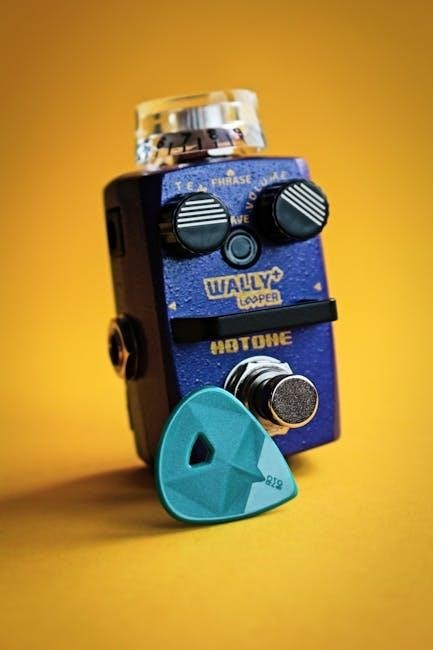
Recommended Foot Switches
Enhance hands-free control of your RC-3 with compatible foot switches. Boss’s own FS-5U or FS-6 dual foot switch are excellent choices, providing dedicated control over loop start/stop and other essential functions. These switches liberate your hands for instrument playing, crucial during live performances.
Third-party switches offering similar functionality are also viable options. Ensure compatibility with the RC-3’s input jack for seamless integration and reliable operation, maximizing your looping workflow.
Power Adapters and Cables
The RC-3 requires a 9V DC power adapter (center negative) for operation, though it can also function with batteries. Boss’s PSA-120 power adapter is officially recommended, ensuring stable and reliable power delivery. Using an incorrect adapter may cause malfunction or damage.
A standard instrument cable connects the RC-3 to your guitar or other instrument, while another cable links it to your amplifier or PA system. High-quality cables minimize noise and signal loss, improving overall audio quality.

Quick Demo: Getting Started Fast
To quickly begin, connect your instrument and amplifier. Power on the RC-3 while holding the pedal – the loop indicator should illuminate. Tap the pedal to start recording; play your phrase. Tap again to stop recording and begin playback. Experiment with overdubbing by repeating the process while the loop plays.
Explore the ‘One Shot’ mode for triggered sounds. Remember to save your creations using the memory function for later recall. This simple workflow unlocks immediate looping potential!
Five Things to Know and Show
First, master the loop/one-shot switching for versatile performance. Second, understand memory management – delete unused loops to avoid overflow errors. Third, explore overdubbing to build complex layers. Fourth, utilize the tempo control for rhythmic precision. Fifth, practice saving and loading loops for seamless set changes.
Demonstrate these skills to showcase the RC-3’s potential, impressing audiences with creative looping and efficient workflow. These features unlock dynamic musical possibilities!
Understanding the Loop/One Shot Indicator
The Loop/One Shot indicator is crucial for understanding the RC-3’s operation. A solid Loop indicator signifies continuous playback of your recorded loop. A flashing Loop indicator signals a full memory, requiring loop deletion. The One Shot mode, indicated accordingly, plays the loop once and stops.
Pay close attention to this light; it provides vital feedback on recording status, memory availability, and current playback mode, ensuring smooth and intuitive looping performances.

Detailed Specifications of the RC-3
The Boss RC-3 boasts 3-hours of stereo recording time, housed within a compact stompbox design. It weighs approximately 3 kg and includes an AC adapter and USB cable for connectivity. The unit supports WAV file import/export via USB.
Its nominal input level is -20 dBu, and the nominal output level is -18 dBu. Power consumption is 45mA. These specifications highlight its portability and versatile integration into existing setups.
Resources and Further Learning
For deeper understanding, explore the official Boss website for downloadable manuals (RC-300_rus.pdf, 11.27MB) and FAQs; Online communities and forums dedicated to loop stations offer valuable tips and shared experiences.
Internet Archive provides access to older Boss Audio Systems manuals. YouTube tutorials demonstrate practical techniques. Consider exploring resources for the RC-505 to grasp broader concepts, enhancing your RC-3 proficiency and creative potential.