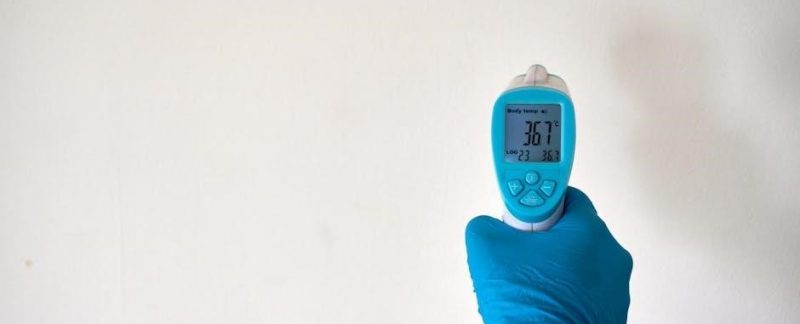
Article Plan: Celsius to Fahrenheit Chart PDF
This article details creating and utilizing Celsius to Fahrenheit charts, including printable PDFs, conversion formulas, and quick methods for temperature adjustments․
Temperature scales are standardized ways to measure the degree of hotness or coldness․ Historically, various scales emerged, but Celsius and Fahrenheit became dominant․ Understanding these scales is crucial for diverse applications, from daily weather reports to scientific research and, of course, converting temperatures using a Celsius to Fahrenheit chart PDF․
The Celsius scale, part of the metric system, sets 0°C as the freezing point of water and 100°C as its boiling point․ Conversely, the Fahrenheit scale assigns 32°F to freezing and 212°F to boiling․ These differing benchmarks necessitate conversion, making charts and formulas essential tools․ A readily available Celsius to Fahrenheit chart PDF simplifies these conversions for quick reference․
Understanding Celsius and Fahrenheit
Celsius (°C), widely used globally, is a decimal scale where water freezes at 0° and boils at 100°․ Its simplicity aligns with the metric system․ Fahrenheit (°F), primarily used in the United States, defines water’s freezing point at 32° and boiling point at 212°․ This scale offers finer gradations, but can seem less intuitive․
The difference in scale origins and increments explains why direct comparison is impossible without conversion․ A Celsius to Fahrenheit chart PDF visually represents this relationship․ Recognizing these distinctions is vital when interpreting weather data, cooking recipes, or scientific findings․ Utilizing a Celsius to Fahrenheit chart PDF ensures accurate temperature interpretation across different contexts․
The Need for Conversion Charts
Temperature scales differ globally, creating a need for quick and accurate conversions․ Relying on mental calculations can be prone to errors, especially in time-sensitive situations․ A Celsius to Fahrenheit chart PDF provides an immediate reference point, eliminating calculation risks․
These charts are invaluable for international travel, cooking (where recipes often use different scales), and understanding weather reports from various sources․ A readily available Celsius to Fahrenheit chart PDF streamlines these processes․ Furthermore, they aid in scientific work requiring consistent temperature measurements․ Accessibility and ease of use make conversion charts essential tools for diverse applications․
What is a Celsius to Fahrenheit Chart?
A Celsius to Fahrenheit chart is a visual tool displaying corresponding temperatures across both scales․ Typically presented as a table, it lists Celsius values alongside their Fahrenheit equivalents, facilitating quick look-up․ A Celsius to Fahrenheit chart PDF offers portability and easy printing for convenient access․
These charts often cover a range, such as 0-100°C, providing a comprehensive reference․ ClassicWriteDesign offers customizable versions for tailored use․ The chart’s design prioritizes clarity, with organized tables and easily readable values․ It’s a practical alternative to manual calculations, especially when immediate conversions are needed․
Benefits of Using a Printable Chart
A printable Celsius to Fahrenheit chart offers numerous advantages․ Immediate access is key – no need for internet connectivity or device reliance․ This is particularly useful in kitchens, labs, or outdoor settings․ Portability allows you to carry temperature conversions wherever needed, aiding in cooking, baking, or scientific experiments․
Charts eliminate calculation errors, ensuring accuracy․ They’re also excellent educational tools, reinforcing the relationship between the scales․ A Celsius to Fahrenheit chart PDF is cost-effective and customizable, allowing users to tailor it to specific temperature ranges․ It’s a simple, efficient solution for frequent conversions․
Key Formula: Celsius to Fahrenheit Conversion
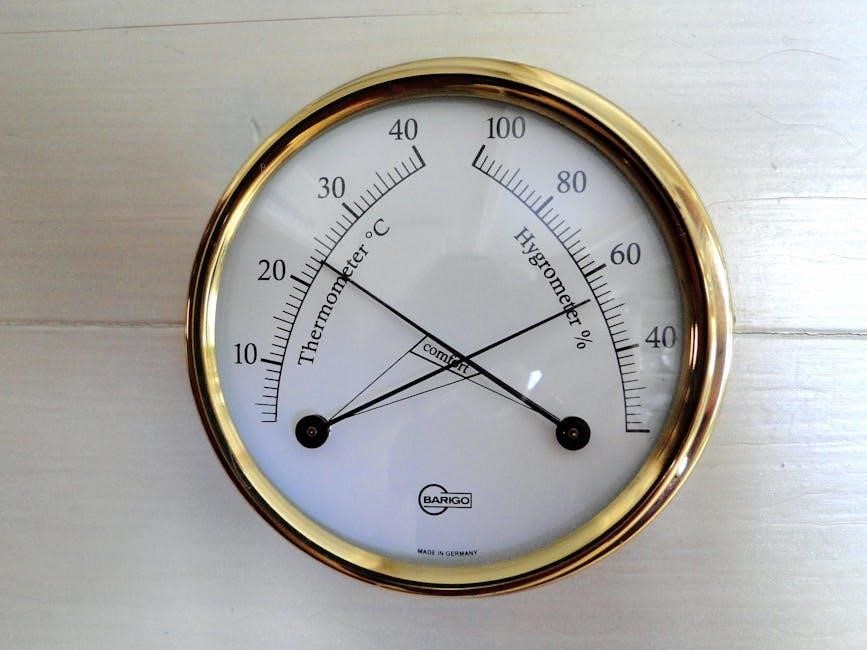
The cornerstone of converting between Celsius and Fahrenheit lies in a precise mathematical formula․ Understanding this formula: F = (C × 9/5) + 32, is crucial for accurate temperature adjustments․ This equation takes a temperature reading in Celsius (C), multiplies it by 9/5, and then adds 32 to arrive at the equivalent temperature in Fahrenheit (F)․
While Celsius to Fahrenheit chart PDFs provide quick references, knowing the formula empowers users to perform conversions independently․ It’s fundamental for scientific applications and ensures consistent results․ Mastering this conversion is a valuable skill for anyone working with both temperature scales․
The Formula: F = (C × 9/5) + 32
Let’s break down the formula F = (C × 9/5) + 32․ ‘F’ represents the temperature in Fahrenheit, and ‘C’ signifies the temperature in Celsius․ The multiplication by 9/5 accounts for the differing size of degree units between the two scales․ Adding 32 adjusts for the offset in the freezing points of water – 0°C versus 32°F․
Utilizing a Celsius to Fahrenheit chart PDF can be convenient, but understanding this formula provides a deeper comprehension of the conversion process․ It allows for calculations beyond those listed on a standard chart, ensuring accuracy in various contexts, from cooking to weather forecasting․
Common Celsius to Fahrenheit Conversions (0-100°C)
A Celsius to Fahrenheit chart PDF frequently showcases common conversions for quick reference․ Here are a few key examples: 0°C equates to 32°F, the freezing point of water․ 10°C is 50°F, a comfortable room temperature․ 20°C translates to 68°F, often considered ideal indoor climate․ 30°C reaches 86°F, a warm summer day․
Reaching 40°C is 104°F, quite hot! 50°C is 122°F, and 100°C (the boiling point of water) is 212°F․ These conversions are invaluable when using a chart, or when needing to quickly estimate temperatures without complex calculations, aiding in applications like cooking and understanding weather reports․
0°C to 32°F
Zero degrees Celsius (0°C) is equivalent to thirty-two degrees Fahrenheit (32°F)․ This is a crucial benchmark as it represents the freezing point of water – a fundamental temperature in many scientific contexts and everyday life․ A Celsius to Fahrenheit chart PDF will prominently display this conversion․
Understanding this point is essential for interpreting weather data, especially when dealing with potential frost or freezing conditions․ It’s a foundational conversion used in scientific experiments and cooking recipes․ This conversion is often the starting point for understanding the relationship between the two scales, making it a key element in any temperature conversion resource․
10°C to 50°F
Ten degrees Celsius (10°C) corresponds to fifty degrees Fahrenheit (50°F)․ This temperature is often perceived as cool, representing a mild chill in many climates․ A comprehensive Celsius to Fahrenheit chart PDF will clearly illustrate this conversion for quick reference․
This conversion is particularly relevant when checking weather forecasting reports or preparing for outdoor activities․ It’s a temperature where light jackets or sweaters become necessary for comfort․ Understanding this equivalence aids in accurately interpreting temperature readings and making informed decisions about clothing and activities․ It’s a common temperature point found on conversion resources․
20°C to 68°F
Twenty degrees Celsius (20°C) is equivalent to sixty-eight degrees Fahrenheit (68°F)․ This temperature is generally considered room temperature and is quite comfortable for most people․ A readily available Celsius to Fahrenheit chart PDF will showcase this common conversion point․
This is a frequently encountered temperature in everyday life, impacting both cooking and baking recipes and indoor climate control․ It’s a pleasant temperature for outdoor activities without requiring heavy clothing․ Accurate conversion, as displayed on a chart, is crucial for consistent results in scientific experiments and international travel․ It’s a key benchmark for temperature understanding․
30°C to 86°F
Thirty degrees Celsius (30°C) corresponds to eighty-six degrees Fahrenheit (86°F)․ This temperature is often experienced during warm summer days and is considered quite hot․ A comprehensive Celsius to Fahrenheit chart PDF will clearly illustrate this conversion for quick reference․
At 30°C, it’s important to stay hydrated and seek shade, especially during prolonged outdoor exposure․ This temperature is relevant in weather forecasting and understanding heat indexes․ Accurate conversion, facilitated by a chart, is vital for scientific experiments requiring precise temperature control․ It’s a common temperature for comfortable swimming and enjoying outdoor recreation․
40°C to 104°F
Forty degrees Celsius (40°C) is equivalent to one hundred and four degrees Fahrenheit (104°F)․ This represents a high temperature, often associated with heatwaves and requiring significant precautions․ A readily available Celsius to Fahrenheit chart PDF provides immediate access to this crucial conversion․
At 40°C, the risk of heatstroke and heat exhaustion increases substantially․ Utilizing a chart ensures accurate temperature readings for cooking and baking, particularly when adapting international recipes․ This conversion is also vital in scientific experiments where precise temperature control is paramount․ Staying indoors and avoiding strenuous activity are recommended at this temperature․
Quick Conversion Methods (Approximations)
For rapid, mental estimations, several approximation methods bypass the precise formula found in a Celsius to Fahrenheit chart PDF․ One common technique for converting Celsius to Fahrenheit is to subtract 30 from the Celsius temperature and then divide the result by 2․ This provides a reasonably close approximation for everyday use․
Conversely, to convert Fahrenheit to Celsius quickly, double the Fahrenheit temperature and add 30․ While these methods aren’t perfectly accurate, they offer a convenient alternative when a precise conversion isn’t critical, like checking the weather forecasting․ Remember, larger temperature values will yield greater errors․
Subtract 30, Divide by 2 (Celsius to Fahrenheit)
This approximation method offers a swift way to estimate Fahrenheit from Celsius without relying on a Celsius to Fahrenheit chart PDF or complex calculations․ Simply subtract 30 from the Celsius temperature, and then divide the resulting number by 2․ This provides a reasonably accurate conversion for everyday temperature ranges․
For example, to convert 25°C to Fahrenheit, subtract 30 (25 ─ 30 = -5) and then divide by 2 (-5 / 2 = -2․5)․ Add this to 32 to get the final Fahrenheit temperature․ While not exact, it’s a useful mental shortcut, particularly when precision isn’t paramount․
Double and Add 30 (Fahrenheit to Celsius)
For a quick Celsius estimation from Fahrenheit, without needing a detailed Celsius to Fahrenheit chart PDF, employ this simple technique․ Double the Fahrenheit temperature and then add 30 to the result․ This provides a fast, albeit approximate, conversion suitable for everyday scenarios where pinpoint accuracy isn’t crucial․
Consider converting 77°F to Celsius․ Double 77 (77 x 2 = 154), then add 30 (154 + 30 = 184)․ Divide by 2 to get the final Celsius temperature․ Remember, the larger the temperature, the greater the potential for error with this method, but it’s a handy mental calculation․
Where to Find Celsius to Fahrenheit Chart PDFs
Numerous online resources offer readily available Celsius to Fahrenheit chart PDFs for free download․ A simple web search using keywords like “Celsius to Fahrenheit chart PDF” will yield a plethora of options․ Websites like ClassicWriteDesign provide customizable charts, catering to specific needs․
Educational websites and temperature conversion tool sites also frequently host printable charts․ Ensure the source is reputable to guarantee accuracy․ Many charts are designed for quick reference, displaying conversions for common temperatures․ Downloading and printing a PDF allows for offline access, making it ideal for situations without internet connectivity․
Customizing Your Own Chart
Creating a personalized Celsius to Fahrenheit chart allows tailoring to specific temperature ranges and preferences; Using spreadsheet software like Excel or Google Sheets offers full control over layout and values․ Users can input desired Celsius temperatures and apply the conversion formula (F = (C × 9/5) + 32) to generate corresponding Fahrenheit values․
Customization extends to formatting – adjusting font sizes, colors, and adding borders for improved readability․ Charts can be designed for specific applications, such as cooking or scientific experiments, focusing on relevant temperature intervals․ Once finalized, the chart can be exported as a PDF for easy printing and sharing․
Applications of Temperature Conversion
Temperature conversion charts are invaluable across diverse fields․ In cooking and baking, recipes often utilize Fahrenheit, requiring conversion from Celsius for international users․ Weather forecasting frequently presents temperatures in both scales, necessitating quick understanding for global audiences․
Scientific experiments demand precise temperature control, often requiring conversions for data analysis and comparison․ International travel also benefits from readily available conversion tools․ A Celsius to Fahrenheit chart PDF simplifies these tasks, providing a convenient reference for accurate temperature interpretation in various contexts, ensuring seamless understanding and application․
Cooking and Baking
Accurate temperature is crucial in culinary arts․ Many recipes, particularly those originating in the United States, specify temperatures in Fahrenheit․ A Celsius to Fahrenheit chart PDF becomes essential for cooks using Celsius ovens or following international recipes․
Converting temperatures ensures proper cooking times and prevents undercooked or overcooked dishes․ Precise conversions are vital for baking, where even slight temperature variations can significantly impact results․ Having a readily available chart eliminates calculation errors, guaranteeing consistent and delicious outcomes․ This simplifies recipe adaptation and expands culinary possibilities․
Weather Forecasting
Understanding weather reports often requires converting between Celsius and Fahrenheit․ Global weather sources frequently utilize Celsius, while many regions, notably the United States, rely on Fahrenheit․ A Celsius to Fahrenheit chart PDF provides a quick reference for interpreting international forecasts․
This is particularly useful for travelers or individuals monitoring weather patterns across different countries․ Quick conversion allows for immediate comprehension of temperature conditions, aiding in appropriate clothing choices and activity planning․ Access to a chart streamlines the process, eliminating the need for mental calculations during time-sensitive weather updates․
Scientific Experiments
Many scientific disciplines require precise temperature measurements and conversions․ A Celsius to Fahrenheit chart PDF becomes invaluable when replicating experiments from international sources or collaborating with researchers using different temperature scales․ Accurate conversion is crucial for maintaining experimental integrity and ensuring comparable results․
Whether conducting chemistry, physics, or biology research, a readily available chart eliminates calculation errors and streamlines data analysis․ It’s particularly helpful in fields like materials science, where temperature-dependent properties are critical․ Having a printable chart nearby during experiments promotes efficiency and minimizes potential discrepancies due to conversion mistakes․
Considerations When Using Conversion Charts
While convenient, Celsius to Fahrenheit chart PDFs aren’t always perfect․ Users should be aware of potential rounding errors inherent in pre-calculated charts, especially when high precision is needed․ The chart’s accuracy depends on the number of decimal places used in its construction․
Furthermore, remember that these charts provide discrete values; interpolation may be necessary for temperatures falling between listed points․ Always double-check critical conversions with a calculator, particularly in scientific or technical applications․ Consider the chart’s source and ensure it’s from a reputable provider to guarantee reliability․
Accuracy and Limitations
Celsius to Fahrenheit chart PDFs offer quick conversions, but inherent limitations exist․ Charts typically present rounded values, introducing a degree of inaccuracy․ The “subtract 30, divide by 2” approximation, while fast, yields less precise results, with errors increasing at higher temperatures․
These charts are best suited for everyday use – cooking, weather – where minor discrepancies are inconsequential․ For scientific experiments or precise measurements, relying solely on a chart is discouraged; utilize a calculator or online converter․ Remember, chart accuracy is directly tied to its construction and the level of rounding applied;
Alternative Conversion Tools (Online Calculators)
While Celsius to Fahrenheit chart PDFs are convenient, online calculators provide superior accuracy and flexibility․ Numerous websites offer instant conversion, eliminating rounding errors inherent in charts․ These tools often allow for conversions beyond typical chart ranges and can handle decimal values with precision․
Benefits include ease of use – simply input the temperature – and accessibility from any device with internet access․ Many calculators also support reverse conversions (Fahrenheit to Celsius)․ For critical applications demanding exact temperatures, online calculators are the preferred method over relying on a static, potentially imprecise, PDF chart․
Chart Design and Readability
Effective Celsius to Fahrenheit chart design prioritizes clarity and ease of use․ A well-structured table format, with clearly delineated columns for Celsius and Fahrenheit values, is crucial․ Utilizing a legible font size – at least 10pt, ideally larger – ensures comfortable reading․
Consider using bolding or shading to distinguish column headers and key conversion points․ Logical ordering, typically ascending Celsius values, aids quick location of desired temperatures․ Avoiding excessive clutter and maintaining sufficient white space enhances readability․ A visually appealing chart encourages frequent use and minimizes conversion errors․
Printable Chart Features (Layout, Font Size)
Ideal printable Celsius to Fahrenheit charts feature a clean, organized layout․ A tabular format is standard, with Celsius values in one column and corresponding Fahrenheit values in another․ Font size should be a minimum of 10pt, but 12pt or larger is preferable for easy readability, especially for those with visual impairments․
Charts should fit comfortably on a standard 8․5 x 11 inch page․ Consider including key conversion points like freezing (0°C/32°F) and boiling (100°C/212°F)․ Clear column headers and borders enhance organization․ A simple, uncluttered design maximizes usability and minimizes printing costs․
The Value of a Celsius to Fahrenheit Chart
A Celsius to Fahrenheit chart, particularly in PDF format, remains a valuable tool despite readily available online converters․ These charts offer instant access to conversions without requiring an internet connection or device․ They are exceptionally useful in situations where quick reference is needed – cooking, scientific work, or outdoor activities․
Printable charts provide a tangible resource, easily posted in kitchens or labs․ Understanding the conversion process, facilitated by the chart, enhances practical skills․ Whether a simple table or a more detailed guide, a Celsius to Fahrenheit chart empowers users with temperature knowledge․
Resources and Further Reading
For comprehensive temperature conversion information, explore online resources like ClassicWriteDesign, offering customizable Fahrenheit to Celsius charts․ Numerous websites provide interactive converters, enabling quick temperature adjustments between scales – a useful supplement to static charts․
Educational platforms and scientific websites detail the history and scientific basis of Celsius and Fahrenheit scales․ To deepen understanding of temperature measurement, consider resources on thermal physics․ Printable chart templates are available through various design websites, allowing for personalized chart creation․ Remember to verify information from multiple sources for accuracy․