
Fundamentals of Firefighter Skills 4th Edition Workbook: A Comprehensive Plan
Fundamentals of Firefighter Skills and Hazardous Materials Response, 4th Edition, offers a complete answer key resource, aiding comprehension and skill mastery for firefighters.
This 4th Edition workbook, accompanying Fundamentals of Firefighter Skills and Hazardous Materials Response, serves as a crucial training companion for both aspiring and seasoned firefighters. It’s designed to reinforce learning through practical application and self-assessment, directly supporting the core curriculum. The workbook isn’t merely a collection of questions; it’s a dynamic tool intended to solidify understanding of essential firefighting techniques and strategies.
A key component of this edition is the inclusion of comprehensive answer keys, facilitating independent study and immediate feedback. These answer keys aren’t simply providing correct responses, but also offer insights into the reasoning behind them, enhancing critical thinking. The workbook’s structure mirrors the textbook, allowing for seamless integration into training programs and individual study plans. It prepares firefighters for real-world scenarios, promoting competence and confidence.
Understanding the Importance of Answer Keys
The answer keys within the Fundamentals of Firefighter Skills 4th Edition Workbook are paramount to effective learning and skill development. They transcend simple “correct/incorrect” evaluations, functioning as valuable teaching instruments. By referencing the answer key, firefighters can pinpoint knowledge gaps and areas requiring further study, fostering a proactive approach to self-improvement.
These answer keys, derived from Fire Fighting Tactics and Strategy, provide detailed explanations, clarifying the rationale behind each correct answer. This deeper understanding is crucial for applying knowledge in dynamic, real-world emergency situations. Utilizing the answer key effectively promotes critical thinking and problem-solving skills, essential attributes for successful firefighters. The availability of these resources accelerates the learning process and ensures competency.
Workbook Organization and Key Sections
The Fundamentals of Firefighter Skills 4th Edition Workbook is meticulously organized to facilitate a progressive learning experience. Key sections cover core firefighting competencies, hazardous materials response, firefighter safety, and advanced skills like vehicle extrication and advanced medical techniques. Each chapter builds upon preceding knowledge, ensuring a solid foundation.
The workbook integrates practical skill drills, such as Skill Drill 14-5 (victim assistance), alongside knowledge checks and photo caption exercises. These elements are designed to reinforce learning and assess comprehension. Crucially, the accompanying answer key provides immediate feedback, enabling self-assessment and targeted review. The document from Fire Fighting Tactics and Strategy provides the answers to these exercises, enhancing the workbook’s utility.
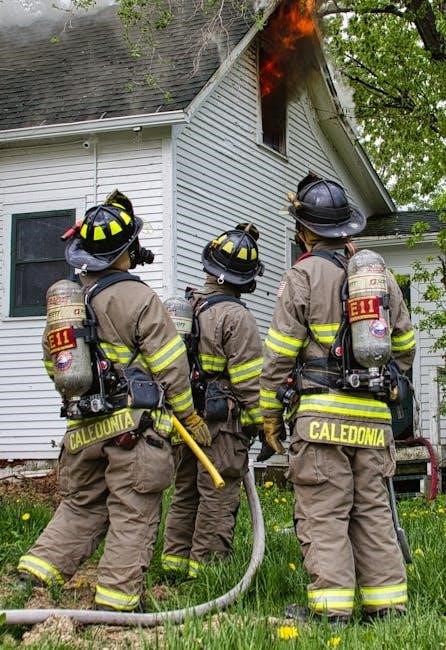
Core Firefighter Skills Covered
This edition comprehensively covers basic skills, forcible entry, search and rescue, and fire suppression, all supported by a detailed answer key resource.
Basic Firefighter Skills – Foundations
The foundational skills section within the Fundamentals of Firefighter Skills 4th Edition Workbook establishes crucial competencies for all fire service personnel. These core elements, thoroughly assessed with the provided answer key, include understanding fire behavior, building construction principles, and essential tool operation.
Firefighters learn proper hose handling techniques, nozzle selection, and effective water application strategies. The workbook reinforces these concepts through practical exercises and knowledge checks, with the answer key serving as a vital self-study tool. Furthermore, it emphasizes victim assessment and basic life support skills, preparing firefighters for initial patient care scenarios.
Mastery of these foundational skills, validated by the answer key, is paramount for safe and effective fireground operations, forming the bedrock for more advanced training and specialized roles within the fire service.
Forcible Entry Techniques
The Fundamentals of Firefighter Skills 4th Edition Workbook dedicates significant attention to forcible entry, a critical skill for gaining access to structures and rescuing occupants. The accompanying answer key ensures comprehension of various entry methods, including door breaching, window removal, and wall penetration techniques.
Firefighters learn to identify different door and window construction types, selecting the appropriate tools and strategies for each situation. The workbook emphasizes safety considerations, such as assessing structural stability and avoiding self-harm during entry operations. Practical drills, reinforced by the answer key, cover tool maintenance and proper usage.
Understanding the principles of leverage, prying, and cutting, as validated by the answer key, is essential for efficient and effective forcible entry, ultimately enhancing rescue capabilities and minimizing fire spread.
Search and Rescue Procedures
Fundamentals of Firefighter Skills 4th Edition Workbook places paramount importance on effective search and rescue (SAR) operations, and the answer key solidifies understanding of these life-critical procedures. The workbook details systematic search patterns – including the right-hand wall search and block search – ensuring thorough coverage of the hazard area.
Firefighters learn to identify victim locations, assess their conditions, and safely remove them from danger. The answer key reinforces knowledge of rapid intervention team (RIT) protocols and firefighter accountability systems. Emphasis is placed on communication, teamwork, and maintaining situational awareness during dynamic SAR scenarios.
Drills, validated by the answer key, cover victim packaging, extrication techniques, and proper use of SAR equipment, ultimately maximizing the chances of successful rescues.
Fire Suppression Strategies
The Fundamentals of Firefighter Skills 4th Edition Workbook, supported by its comprehensive answer key, meticulously covers diverse fire suppression strategies. It details the application of water streams – from straight streams to fog patterns – and their effectiveness on different fuel types. Understanding fire behavior, including stages of fire development and ventilation principles, is crucial, and the answer key confirms comprehension.
The workbook explores offensive versus defensive strategies, emphasizing risk assessment and firefighter safety. It delves into coordinated fire attack techniques, relay pumping operations, and the proper use of extinguishing agents beyond water.
Practical drills, validated by the answer key, reinforce knowledge of nozzle techniques, hose lays, and achieving effective fire control, ultimately enhancing firefighters’ ability to mitigate fire incidents safely and efficiently.

Hazardous Materials Response
The Fundamentals of Firefighter Skills workbook, with its answer key, provides essential training for hazardous materials incidents, covering awareness and operations levels.
Awareness Level Training
Awareness Level training, detailed within the Fundamentals of Firefighter Skills 4th Edition Workbook, equips first responders to recognize potential hazardous materials incidents. The accompanying answer key reinforces learning, ensuring comprehension of key indicators. This foundational level focuses on identifying hazards without attempting to contain them, prioritizing scene safety and notification procedures.
Firefighters learn to observe clues like placards, shipping papers, and unusual odors, understanding the potential risks involved. The workbook’s drills, validated by the answer key, emphasize the importance of isolating the area and initiating the Emergency Response Guidebook (ERG). Successful completion builds a crucial base for further hazardous materials training, preparing responders to effectively protect themselves and the public.
Operations Level Training
Operations Level training, as presented in the Fundamentals of Firefighter Skills 4th Edition Workbook, builds upon awareness, enabling responders to take defensive actions at a hazardous materials incident. The answer key provides crucial validation for understanding protective actions and basic control measures. This level involves assessing the nature of the release, selecting appropriate PPE, and containing the flow if it doesn’t risk further danger.
Firefighters learn to utilize the ERG more extensively, interpreting hazard information and implementing basic decontamination procedures. Workbook exercises, confirmed by the detailed answer key, emphasize the importance of working within established incident command structures and following safety protocols; Successful completion prepares responders for limited intervention, protecting lives and the environment while awaiting specialized teams.
Hazmat Decontamination Procedures
Hazmat Decontamination Procedures, thoroughly covered within the Fundamentals of Firefighter Skills 4th Edition Workbook, are critical for protecting responders and preventing secondary contamination. The accompanying answer key reinforces understanding of the three levels – gross, intermediate, and final decontamination – and their appropriate applications. Firefighters learn to establish decontamination corridors, utilizing various agents and techniques to remove hazardous substances;
Workbook drills, validated by the answer key, emphasize the importance of proper PPE removal sequences and the potential for cross-contamination. Understanding the principles of chemical reactivity and selecting appropriate decontamination solutions are key components. Effective decontamination minimizes exposure risks and ensures the safety of personnel and the public, a vital skill reinforced through practical exercises and knowledge checks.
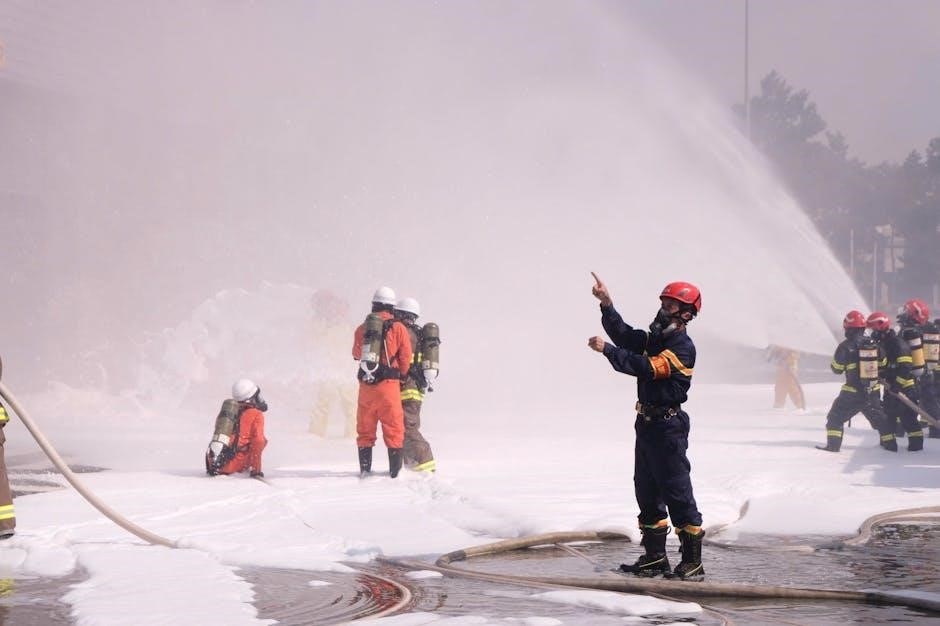
Firefighter Safety and Wellness
The Fundamentals of Firefighter Skills workbook, with its answer key, stresses PPE, respiratory protection, and stress management for firefighter wellbeing.
Personal Protective Equipment (PPE)
Personal Protective Equipment (PPE) is a cornerstone of firefighter safety, and the Fundamentals of Firefighter Skills 4th Edition Workbook thoroughly covers its proper selection, use, and maintenance. The associated answer key reinforces understanding of PPE standards, including helmets, coats, pants, gloves, and boots, ensuring firefighters are adequately protected from hazards encountered on the fireground.
The workbook details the importance of regular inspections and cleaning of PPE to maintain its effectiveness. It also addresses the limitations of PPE and the need for ongoing training to ensure firefighters understand how to properly don and doff their gear. Correct answers, verified by the answer key, demonstrate comprehension of these critical safety protocols. Furthermore, the resource emphasizes the relationship between proper PPE usage and reduced injury risk, promoting a culture of safety within the fire service.
Respiratory Protection Programs
Respiratory Protection Programs are vital for safeguarding firefighters from the inhalation of toxic gases and particulate matter. The Fundamentals of Firefighter Skills 4th Edition Workbook dedicates significant attention to these programs, outlining the requirements for Self-Contained Breathing Apparatus (SCBA) and supplied-air respirators. The accompanying answer key validates understanding of program elements like medical evaluations, fit testing, and training procedures.
The workbook stresses the importance of proper SCBA maintenance and the recognition of potential failure points. Correct responses, confirmed by the answer key, demonstrate knowledge of air management techniques and emergency procedures. It also covers the hazards associated with atmospheric contaminants and the selection of appropriate respiratory protection based on the specific incident. A robust respiratory protection program, as detailed and assessed within the workbook, is paramount for firefighter health and safety.
Stress Management for Firefighters
Stress Management for Firefighters is a crucial component of overall wellness, addressed within the Fundamentals of Firefighter Skills 4th Edition Workbook. The demanding nature of the profession exposes firefighters to traumatic events, leading to potential psychological distress. The workbook’s answer key reinforces comprehension of coping mechanisms and available support systems.
It emphasizes recognizing the signs and symptoms of stress, burnout, and Post-Traumatic Stress Disorder (PTSD). Correct answers, verified by the key, demonstrate understanding of critical incident stress management (CISM) techniques and the importance of peer support. The material highlights the need for proactive strategies, including mindfulness, exercise, and maintaining healthy relationships. Acknowledging and addressing mental health is presented as a sign of strength, vital for sustained performance and well-being within the fire service.
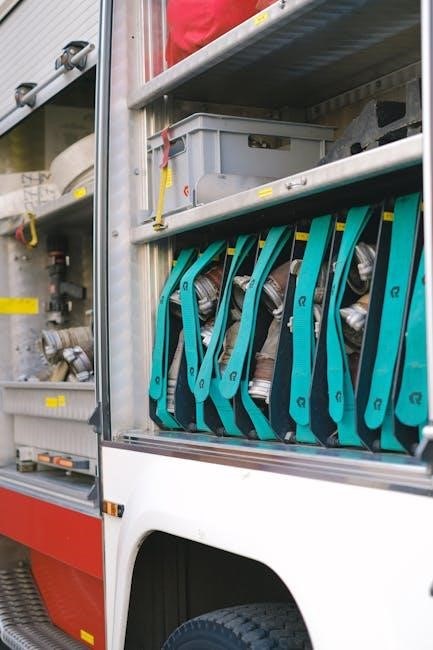
Advanced Firefighter Skills
The Fundamentals of Firefighter Skills workbook, with its answer key, covers advanced techniques like vehicle extrication, IV therapy, and ICS protocols.
Vehicle Extrication Techniques
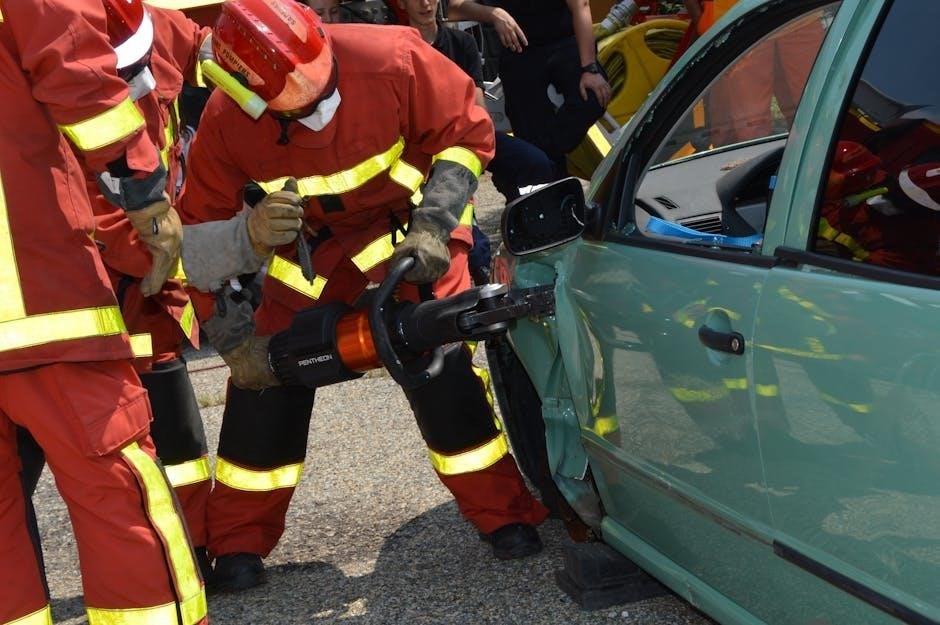
Fundamentals of Firefighter Skills, 4th Edition, dedicates significant attention to vehicle extrication, a crucial advanced skill for modern firefighters. The associated workbook, complemented by a detailed answer key, provides comprehensive training on safely removing victims trapped within damaged vehicles.
A key consideration highlighted within the materials, particularly regarding newer vehicles, involves proximity key systems. Firefighters must understand how to disable these systems, moving the key a considerable distance from the vehicle to prevent unintended activation of airbags or locking mechanisms during extrication procedures.
The workbook’s answer key reinforces proper technique, ensuring firefighters can confidently and effectively utilize hydraulic rescue tools, stabilization methods, and glass management strategies. Skill Drill 14-5 (though misnumbered) emphasizes victim assistance during this complex operation, a critical component of successful extrication.
Advanced Medical Skills (IV Therapy, Cardiac Monitoring)
The Fundamentals of Firefighter Skills, 4th Edition, expands beyond basic life support, incorporating advanced medical interventions. The accompanying workbook, supported by a comprehensive answer key, provides detailed instruction and assessment tools for these critical skills.
Firefighters are increasingly expected to perform advanced procedures, including intravenous (IV) therapy for fluid and medication administration, and cardiac monitoring to assess a patient’s heart rhythm. The materials cover drug administration protocols, advanced airway insertion techniques, and manual defibrillation procedures.
The answer key within the workbook is vital for verifying understanding of these complex medical skills. It ensures firefighters can accurately interpret cardiac rhythms, calculate medication dosages, and confidently apply these life-saving interventions in emergency situations, ultimately improving patient outcomes.
Incident Command System (ICS)
The Fundamentals of Firefighter Skills, 4th Edition, dedicates significant attention to the Incident Command System (ICS), a standardized approach to emergency management. The workbook, bolstered by a detailed answer key, reinforces understanding of ICS principles and practical application.
Effective incident management relies on a clear chain of command, unified command principles, and efficient resource allocation. The materials cover command establishment, transfer of command, and the importance of a well-defined organizational structure at emergency scenes.
The answer key serves as a crucial tool for assessing comprehension of ICS roles, responsibilities, and procedures. It helps firefighters understand how to effectively communicate, coordinate, and collaborate with other agencies, ensuring a safe and efficient response to any incident, maximizing operational effectiveness.
Specific Skill Drill Analysis

Detailed answer keys for specific drills, like Skill Drill 14-5 (victim assistance), are included, alongside photo caption exercises for enhanced learning.
Skill Drill 14-5 (Corrected Numbering) – Victim Assistance
This drill, often misnumbered in the workbook, focuses on providing aid to a victim. The answer key details the proper procedures, starting with firefighters assisting the victim to a seated position – two firefighters, one on each side, are crucial.
Further instructions involve careful assessment and communication. Understanding the correct responses to photo captions within the drill is vital for knowledge checks. The fundamentals of firefighter skills are reinforced through practical application and review of the provided answer key.
Correctly completing this drill demonstrates competency in basic victim care, a foundational element of emergency response. The 4th Edition emphasizes practical skills and provides comprehensive support materials for effective training.
Proximity Key Vehicle Considerations
When dealing with vehicles equipped with a proximity key system, a critical step outlined in the fundamentals of firefighter skills 4th edition, is to move the key far away from the vehicle. This action prevents unintended operation of systems like airbags or power locks during extrication.
The workbook’s answer key doesn’t directly address this, but understanding this procedure is paramount for firefighter safety. It’s a crucial detail often overlooked, potentially leading to hazardous situations.
Firefighters must be aware of modern vehicle technology and its implications for emergency operations. This knowledge, combined with diligent use of training materials and the answer key for related drills, ensures a safer and more effective response.
Photo Caption Exercises and Knowledge Checks
The Fundamentals of Firefighter Skills 4th Edition Workbook incorporates photo caption exercises designed to reinforce learning and assess comprehension of key procedures. These exercises, alongside knowledge checks, are vital components of skill mastery.
While the complete answer key isn’t publicly available for every caption, the workbook provides guidance for correct responses. For example, in Skill Drill 14-5, captions require identifying actions like firefighters assisting a victim to sit up.
Utilizing the answer key for similar drills helps firefighters understand the rationale behind correct answers, improving their ability to apply skills effectively in real-world scenarios. Consistent review and self-assessment are crucial for maintaining proficiency.

Utilizing the Answer Key Effectively
The answer key facilitates self-assessment, pinpointing areas needing improvement and reinforcing correct responses within the Fundamentals of Firefighter Skills workbook.
Locating Answers within the Workbook
Successfully navigating the Fundamentals of Firefighter Skills 4th Edition Workbook requires a strategic approach to finding corresponding answers. The answer key directly relates to content presented throughout each chapter, specifically aligning with photo captions, knowledge checks, and skill drill exercises.
Referencing the page numbers indicated within the key is crucial; for example, Skill Drill 14-5 (corrected numbering from the workbook) on page 421 provides a clear starting point.
Remember to cross-reference the skill being assessed – victim assistance, forcible entry, or hazardous materials – with the relevant section in the workbook; Understanding the context of the question within the broader curriculum enhances the learning process and solidifies comprehension. Careful review of the associated text will confirm the accuracy of the provided answers.
Understanding Corrective Actions for Incorrect Answers
When utilizing the Fundamentals of Firefighter Skills 4th Edition Workbook answer key, encountering incorrect answers isn’t a setback, but a valuable learning opportunity. Don’t simply memorize the correct response; instead, revisit the corresponding section within the workbook to pinpoint the knowledge gap.
Analyze why your initial answer was incorrect. Was it a misunderstanding of a concept, a misinterpretation of a procedure (like proximity key vehicle considerations), or a lapse in recall?
Focus on reinforcing the foundational principles related to the question. Review relevant chapters, practice the skill drills, and seek clarification from instructors or peers. This proactive approach transforms errors into stepping stones towards mastery of essential firefighter competencies, ensuring preparedness for real-world scenarios.
Fire Fighting Tactics and Strategy Answer Key
The Fire Fighting Tactics and Strategy document provides a comprehensive answer key, meticulously designed to assess understanding of crucial fire service principles. This resource isn’t merely a list of correct responses; it’s a tool for reinforcing tactical decision-making and strategic thinking.
It includes solutions for matching exercises and questions related to various fire scenarios, ensuring firefighters grasp the nuances of incident management. Utilizing this key alongside the Fundamentals of Firefighter Skills 4th Edition Workbook allows for self-assessment and targeted improvement.
Understanding the rationale behind each correct answer is paramount, fostering a deeper comprehension of effective fireground operations and enhancing overall firefighter proficiency.
Fire Service Administration & Command
Fire Service Administration documentation, specifically Chapter 22, details command establishment and transfer protocols, vital for effective incident management and control.
Chapter 22: Command Establishment and Transfer
Chapter 22, as detailed within Fire Service Administration resources, fundamentally focuses on the critical processes of establishing and transferring command at emergency incidents. This involves a systematic approach to assuming responsibility, developing an incident action plan, and ensuring clear communication amongst all responding personnel.
Effective command establishment necessitates a thorough size-up of the situation, identifying hazards, and prioritizing objectives. Transferring command requires a formal briefing to the incoming Incident Commander, detailing the current status, challenges, and planned actions. Maintaining a robust command structure is paramount for safety and operational efficiency. Understanding these principles, alongside utilizing resources like the Fundamentals of Firefighter Skills workbook, enhances a firefighter’s ability to navigate complex incident scenarios and contribute to successful outcomes. Proper command ensures accountability and coordinated efforts.
Importance of Command Structure

A well-defined command structure is absolutely vital within the fire service, ensuring coordinated operations and firefighter safety. It provides a clear chain of authority, facilitating efficient decision-making and resource allocation during emergencies. This structured approach minimizes confusion, prevents duplication of effort, and maximizes operational effectiveness.
Establishing a robust Incident Command System (ICS) allows for seamless communication and accountability. Utilizing resources like the Fundamentals of Firefighter Skills workbook reinforces understanding of ICS principles and their practical application. A strong command structure isn’t merely about control; it’s about empowering personnel to perform their duties effectively within a unified framework. Ultimately, a clear command structure directly contributes to successful incident resolution and the preservation of life and property.
Workbook as a Training Tool
The Fundamentals of Firefighter Skills 4th Edition workbook serves as an invaluable training resource, supplementing classroom instruction and practical drills. Its comprehensive coverage of essential skills, coupled with the provided answer key, allows for self-assessment and reinforcement of learned concepts. Firefighters can utilize the workbook to identify knowledge gaps and focus their study efforts accordingly;
Beyond skill development, the workbook promotes critical thinking and problem-solving abilities. Regularly reviewing the material and utilizing the answer key to correct mistakes solidifies understanding and prepares firefighters for real-world scenarios. It’s a dynamic tool, adaptable to individual learning styles and departmental training programs, fostering continuous professional development within the fire service.